Partner Dance Boundaries: Consent, Holds, and Rotation
On this page
Quick answer
In partner dance, consent applies to joining a dance, the type of hold, close distance, lifts, corrections, and partner rotation. Ask clearly, accept no without pressure, and check again when the movement changes. Either dancer can pause or leave at any time. Studios should explain contact expectations, offer no-contact alternatives, and respond promptly when boundaries are crossed.
Before class
Read the studio's format and code of conduct. Ask whether partners rotate, whether close embrace or lifts are included, and how dancers request alternatives. Tell the instructor privately about injuries, religious or cultural boundaries, sensory needs, or other relevant limits.
This guide applies to ordinary U.S. classes and social dance. It does not replace a studio's safeguarding policy or professional help after harassment, abuse, or assault.
Ask before contact
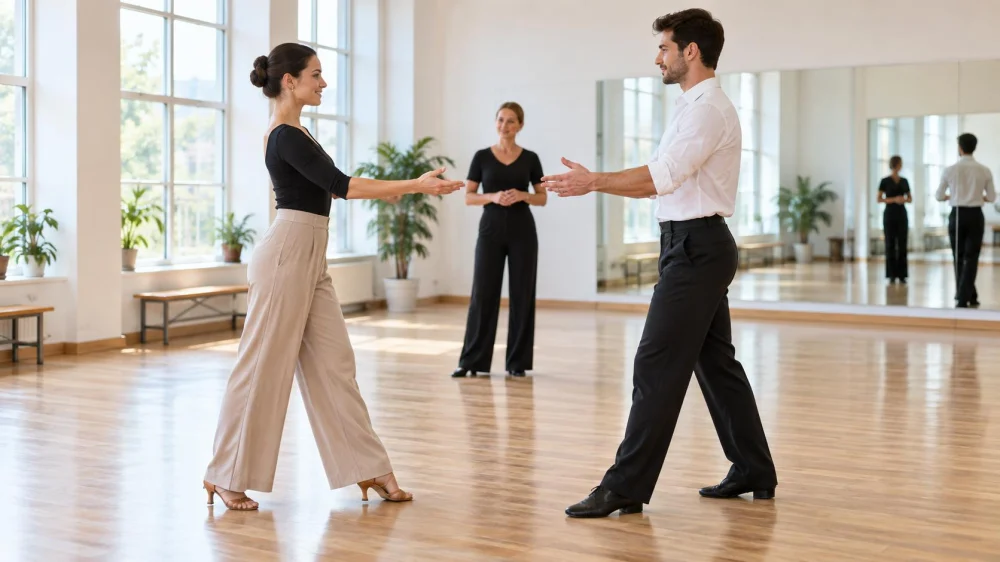
Use short questions: “Would you like to dance?” “Is this hand position comfortable?” or “May I demonstrate that correction with touch?” A hesitant response, withdrawal, freezing, or silence is a reason to stop and clarify, not permission to continue.
Consent to one dance or hold is not consent to every movement. Do not argue, demand an explanation, or punish someone for declining.
Adjust holds safely
- Use the class's stated frame and contact points.
- Keep hands away from intimate areas and unexplained pressure.
- Offer verbal or visual corrections before touching.
- Ask again before close embrace, lifts, dips, assisted stretching, or weight-bearing moves.
- Stop immediately for pain, loss of balance, or a boundary request.
A hold should support communication and balance, not trap a partner. The follower and leader can both suggest more space or a simpler option.
Navigate partner rotation
Rotation can broaden practice but should not be compulsory. A dancer may stay with one partner, practice solo, step out, or skip a pairing. Instructors can normalize a simple hand signal or phrase so declining does not become a public negotiation.
When changing partners, release the hold fully, thank the partner, and move through the designated path without rushing across active dance lanes.
Instructor responsibilities
- Explain expected contact before practice starts.
- Model asking and receiving a no respectfully.
- Provide visible, no-touch teaching options.
- Keep corrections relevant, brief, and observable.
- Publish a reporting route and protect people from retaliation.
Skill, tradition, or authority never removes the need for appropriate boundaries.
Extra safeguards for minors
Youth programs need written policies for adult-minor interaction, changing areas, communications, transport, and reporting. Parents and dancers should know who is responsible for safeguarding. The U.S. Center for SafeSport promotes observable and interruptible adult-minor interactions in covered sport settings; studios outside that system can still evaluate the principle.
Frequently asked questions
Can I refuse partner rotation?
Yes. Ask the instructor for a solo option, a fixed partner, or a brief break.
What if a hold feels unsafe?
Say stop, release contact, and move to a safe position. Tell the instructor if the issue continues.
May an instructor physically correct alignment?
Only with appropriate consent and studio policy. A dancer may request verbal or visual instruction instead.
What if someone ignores a no?
Leave the interaction, seek staff or a trusted person, and use the studio's reporting process. Contact emergency services if there is immediate danger.
Sources and notes
The U.S. Center for SafeSport encourages discussion of physical boundaries and clear prevention policies for youth activities. Its observable and interruptible guidance explains safeguards for adult-minor sport interactions. Applicability varies by organization.
Next steps
Before the next class, learn the contact and rotation format and choose one clear boundary phrase. During practice, ask before changing holds, accept declines immediately, and tell staff when behavior or policy does not support a safe learning environment.
 Ballet San Antonio5.0 (9 reviews)
 Ritmos Latinos UofA Dancing location4.0 (9 reviews)
 Keur Khaleyi African Dance & Cultural Institute, Inc.4.0 (13 reviews)
 Ballet After Dark5.0 (5 reviews)
 V.O.P Dance Studio4.0 (17 reviews)
 Kaliente Dance Studio4.0 (42 reviews)
 Dance Class Hydration: Breaks and Heat Warning Signs
 Partner Dance Boundaries: Consent, Holds, and Rotation
 Dance Class Absences: Makeups, Notes, and Safe Return
 Dance Floor Safety: Surface, Space, and Stop Signals
 Dance Recital Backstage Etiquette: Space, Sound, and Cues
 What to Expect at a Dance Audition: Process and Preparation