What to Expect at a Dance Audition: Process and Preparation
On this page
Quick answer
A dance audition usually asks performers to register, learn movement, dance in small groups, and sometimes present prepared material or attend a callback. Prepare by following the notice exactly, practicing the requested style, bringing required documents and shoes, arriving with time to check in, and learning combinations with focus. Panels may evaluate fit, musicality, technique, adaptability, performance quality, and professional behavior.
An audition is a selection process for a role, program, school, company, team, scholarship, or project. The format depends on the opportunity. Some prioritize one style and prepared choreography; others test how dancers learn unfamiliar material. Knowing the stated process helps you prepare without trying to predict every decision.
Read the audition notice closely
Treat the official notice as the primary source. Record the date, arrival and start times, location, eligibility, styles, footwear, clothing, music, headshot or résumé format, registration method, fee, age requirements, and callback dates. Note whether the audition is open, invited, in person, recorded, or live online.
Check who is producing the audition and where official updates appear. Legitimate opportunities should explain the project or program, requirements, and contact channel. Be cautious about unexpected payment requests, pressure to share sensitive identity information, or instructions that conflict across unofficial posts.
If you need an accessibility accommodation, contact the organizer in advance. Ask specific questions when a requirement is unclear, but avoid requesting information already stated in the notice.
Prepare materials and clothing
Bring only what the audition requests, plus sensible backups:
- Required identification, confirmation, forms, résumé, and current headshot.
- Correct shoes for each requested style and a backup when practical.
- Simple fitted clothing that supports movement and follows the dress direction.
- Water, a light snack if permitted, and personal medical or support items.
- Prepared music in the required format, with an allowed backup.
- Basic hair, clothing, and first-aid supplies you know how to use.
Label personal items discreetly and keep the bag compact. Do not assume changing space, storage, outlets, flooring, or food will be available. For a prepared solo, know the cut, beginning pose, ending, musical cue, and maximum duration.
What may happen in the room
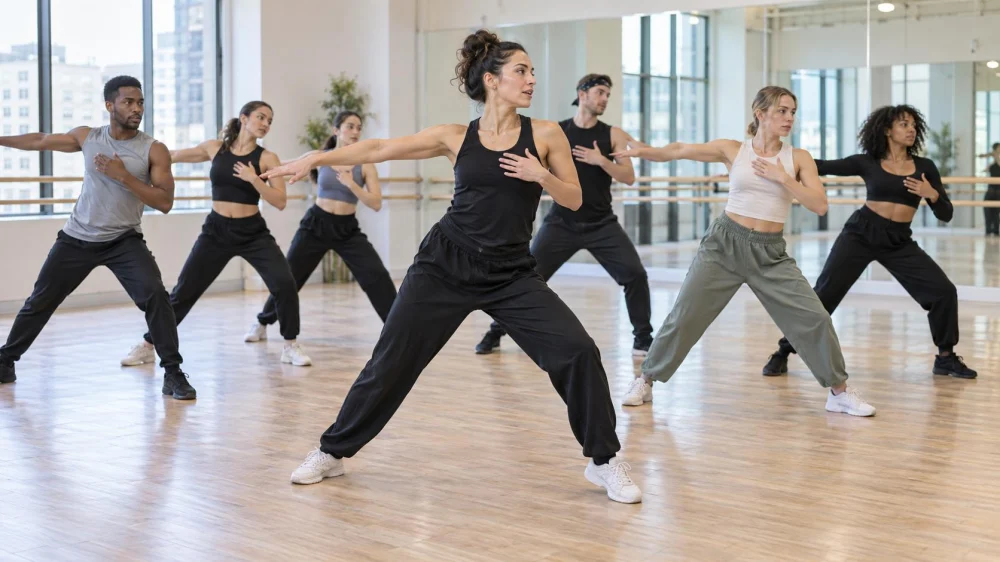
After check-in, dancers may receive a number or placement and enter a common warm-up area. Follow staff directions about where to stand, when to warm up, filming, personal belongings, and shoes. The audition may begin with a technique class or a sequence taught in sections.
Choreography may be shown from the front or back, with counts, music, or both. Dancers can be divided into lines or small groups, rotate positions, and perform more than once. The panel may request a different quality, direction, partner, improvisation, vocal introduction, or short interview. A callback can repeat material or add new tasks.
Being moved, asked to switch groups, or released early does not by itself explain the panel’s opinion. Auditions manage time and compare people against project-specific needs.
How to show your work clearly
Stand where you can see without blocking others. Mark the combination within the space and energy allowed, identify transitions and directional changes, and connect movement to the music. If questions are invited, ask one concise question that helps you perform accurately.
When dancing in groups:
- Enter the space promptly and note your starting point.
- Maintain safe spacing and adapt if another dancer travels unexpectedly.
- Keep performing after a small mistake instead of showing frustration.
- Apply corrections given to the whole group.
- Exit efficiently and stay attentive in case you are called again.
Do not attempt a skill you cannot perform safely just to be noticed. Inform staff discreetly about an injury or necessary modification. Professional behavior includes listening, respecting boundaries, and supporting a safe room—not hiding a dangerous limitation.
What happens afterward
Write down the stated notification method and date. A callback is an additional round, not a final offer. If selected, review schedule, compensation or tuition, contract terms, travel, rehearsal expectations, media permissions, and health or safeguarding policies before committing.
If you are not selected, the result may reflect role type, height mix, partnering, availability, casting concept, program level, or another project need beyond technical skill. Feedback may not be offered. Record one or two useful observations about your preparation, then return to training rather than reconstructing every panel reaction.
Limitations and important notes
Audition customs vary across ballet, contemporary, jazz, commercial dance, musical theater, ballroom, teams, schools, and community productions. Union or professional jobs may have formal procedures; youth auditions require appropriate guardian and safeguarding arrangements.
Health and injury decisions are personal. Warm up in a way suited to your body and the activity, and seek qualified medical guidance for pain or injury. This article cannot assess readiness for a demanding audition.
Sources and evidence notes
This guide reflects common dance audition practice: follow the call, arrive prepared, learn and perform combinations in groups, adapt to direction, and review commitments before accepting. No single evaluation rubric is claimed because selection criteria are opportunity-specific.
Frequently asked questions
How early should I arrive?
Follow the organizer’s check-in guidance. Allow time for travel, registration, changing, and an appropriate warm-up without arriving so early that the venue cannot receive you.
What if I forget the choreography?
Stay present, use musical and spatial cues, rejoin at a point you recognize, and keep performing. One recovery can communicate focus better than stopping visibly.
Should I stand in the front?
Choose a lawful open spot where you can see and learn without crowding. Panels usually organize groups and positions, so front placement alone does not secure attention.
Can I ask for a second chance?
Follow the room’s format. Do not interrupt the schedule, but respond if the panel invites another run or questions. Some auditions allow no repeats.
What should I do at a callback?
Review the original material, bring all required items again, and be ready for changes. Read any new message carefully because the callback may have different timing or content.
Conclusion and next steps
Prepare for the audition that was actually announced: verify logistics, assemble required materials, practice the relevant style, and plan a safe warm-up. In the room, learn with attention, show the requested quality, adapt professionally, and keep perspective. Afterward, track communication and evaluate any offer carefully before committing.


 On Pointe School of Dance5.0 (1 reviews)
 Swing It Seattle5.0 (150 reviews)
 define/ dance space4.0 (23 reviews)
 Polynesian Club of Fresno5.0 (13 reviews)
 Reach For The Barres5.0 (7 reviews)
 Arthur Murray Dance Studio Ridgewood5.0 (49 reviews)
 The History of Waltz That Boosts Confidence
 Cha Cha Tutorial – What You Need to Know for Beginners and Beyond
 What Is a Ring Dance in High School and How to Prepare for It
 How to Master Ballet: Cultural Origins, Techniques, and Influencers
 How to Master Belly Dance to Improve Flexibility
 Salsa Explained: Common Mistakes to Avoid