- Benefits-of-Belly-Dance-for-Kids
- Why-Belly-Dance-Is-Gaining-Popularity-Among-Children
- Top-10-Belly-Dance-Moves-for-Kids
- How-Kids-Can-Practice-Belly-Dance-Safely
- Building-Confidence-Through-Childrens-Dance-Training
- Common-Mistakes-Parents-and-Kids-Should-Avoid
- Choosing-the-Right-Dance-Learning-Environment
- American-Dance-Academy-for-Young-Dancers
Benefits of Belly Dance for Kids
Dancing is one of the most natural ways for children to express themselves. Before kids learn complicated words to describe their emotions, they often move, clap, spin, and create rhythms instinctively. Belly dance builds on this natural creativity while introducing children to music, movement, coordination, and cultural expression.
Many parents searching for the Top 10 Belly Dance Moves for Kids are not only looking for fun activities. They are also interested in helping their children develop confidence, body awareness, and a positive relationship with movement.
Unlike some competitive activities that focus heavily on winning, belly dance encourages children to explore their own style. A child can enjoy the music, learn new skills, and gradually become more comfortable performing in front of others.
1. Physical Development Through Belly Dance
Belly dance includes controlled movements that help children improve balance, flexibility, and coordination. Simple hip movements, arm patterns, and rhythmic steps encourage kids to understand how different parts of their bodies work together.
For younger dancers, these movements can support:
- Better posture
- Improved coordination
- Body control
- Muscle awareness
Because many belly dance movements are low impact, they can be adapted for different ages and skill levels.
2. Emotional Benefits of Dance
Children often experience emotions that are difficult to explain. Dance gives them another way to communicate.
A shy child may become more confident after learning a simple routine. A child who has difficulty focusing may discover that rhythm and repetition help them stay engaged.
Belly dance encourages creativity rather than requiring every dancer to look exactly the same. This freedom can help children feel comfortable being themselves.
Why Belly Dance Is Gaining Popularity Among Children
In recent years, children's dance programs have expanded beyond traditional ballet, jazz, and hip-hop. Families are exploring different forms of dance that introduce children to new cultures while keeping lessons enjoyable.
Belly dance has attracted attention because it combines music, storytelling, and movement. Many children enjoy the colorful costumes, expressive gestures, and playful rhythms associated with this style.
Cultural Learning Through Dance
Belly dance has deep historical roots across regions including the Middle East, North Africa, and Mediterranean cultures. When children learn this dance form respectfully, they gain appreciation for different traditions and artistic expressions.
A good children's dance program focuses not only on movements but also on understanding the background and meaning behind the art form.
A Real-Life Example of Child Confidence Growth
Many dance teachers share stories of children who initially refuse to perform in front of others but gradually become comfortable after weeks of practice.
One common example is a young student who joins a beginner class because a friend invited them. At first, the child follows along quietly and avoids eye contact. After learning simple movements and participating in small performances, the same child may proudly demonstrate routines for family members.
This transformation is one reason many parents choose dance as an activity that supports personal growth.
Top 10 Belly Dance Moves for Kids
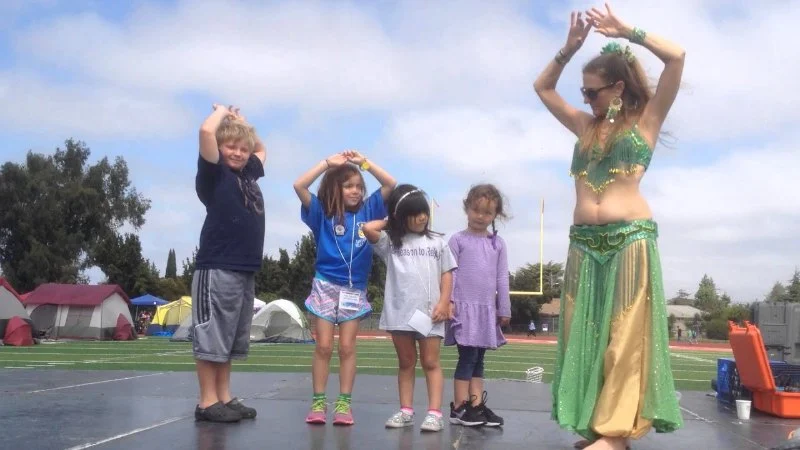
The following beginner-friendly movements are excellent starting points for children. They focus on rhythm, coordination, and enjoyment rather than complicated techniques.
1. Basic Hip Shimmy
The hip shimmy is one of the most recognizable belly dance movements. It involves creating a quick, controlled vibration through the hips.
For kids, the goal is not perfection. The focus should be on feeling the rhythm and learning body control.
Beginner practice tips:
- Stand comfortably with knees slightly bent
- Keep shoulders relaxed
- Move hips gently from side to side
- Practice with fun music
2. Hip Circles
Hip circles teach children how to create smooth, continuous movement.
This move helps improve flexibility and encourages dancers to connect movement with music.
Kids can imagine drawing a large circle with their hips while keeping their upper body relaxed.
3. Chest Lifts and Drops
Chest movements introduce children to isolation techniques, where one part of the body moves while another remains still.
This skill is important because many dance styles require dancers to control individual body movements.
4. Basic Arms and Hand Waves
Arm movements add expression and storytelling to belly dance.
Children often enjoy creating graceful hand patterns because they feel like they are painting shapes in the air.
This movement helps develop:
- Arm coordination
- Musical expression
- Performance confidence
5. Belly Rolls
Belly rolls are a classic belly dance technique that involves controlled movement through the abdominal muscles.
For children, teachers should introduce this movement as a fun body awareness exercise rather than focusing on advanced technique.
6. Side Steps With Hip Movement
Adding steps creates a connection between movement and travel across the dance floor.
Side steps are easier for beginners because they combine simple footwork with basic hip patterns.
7. Figure Eight Hips
The figure eight hip movement helps children understand directional control.
Dancers imagine tracing the number eight with their hips, creating smooth and flowing motion.
This move is often introduced after children become comfortable with basic hip circles.
8. Shimmies With Arm Combinations
Combining movements creates a more complete dance sequence.
Children can practice a simple shimmy while adding arm positions, helping them improve multitasking skills.
9. Basic Traveling Steps
Traveling steps teach children how to move confidently around a performance space.
They learn how to maintain rhythm while changing direction.
10. Freestyle Belly Dance Expression
The final movement is not a specific technique but an opportunity for creativity.
Freestyle allows kids to combine movements they have learned and create their own dance personality.
This is often where children discover the most joy because there are no strict rules.
How Kids Can Practice Belly Dance Safely
Safety should always be the priority when children learn any physical activity.
1. Warm Up Before Dancing
A proper warm-up prepares muscles for movement and helps prevent discomfort.
Simple activities include:
- Gentle stretching
- Shoulder rolls
- Light walking
- Rhythm exercises
2. Wearing Comfortable Dance Clothing
Children should wear clothing that allows free movement. Comfortable outfits help them focus on learning instead of adjusting their clothes.
3. Keeping Practice Fun
The best learning environment encourages curiosity. Children should feel excited to dance rather than pressured to perform perfectly.
Building Confidence Through Children's Dance Training
One of the greatest benefits of learning belly dance is confidence development.
1. Learning Performance Skills
Performing in front of others teaches children valuable communication skills.
They learn how to stand confidently, remember routines, and express themselves.
2. Encouraging Personal Creativity
Every child moves differently. Good instructors encourage individuality instead of forcing every student into one style.
3. Developing Discipline
Dance requires practice and patience. Children learn that improvement comes from consistent effort.
Common Mistakes Parents and Kids Should Avoid
1. Focusing Only on Perfect Technique
Young dancers should enjoy the process. Excessive pressure can reduce motivation.
2. Choosing Age-Inappropriate Lessons
Children need instruction designed for their age and physical development.
3. Ignoring the Fun Element
The strongest learning happens when children enjoy what they are doing.
Choosing the Right Dance Learning Environment
A supportive dance environment can make a major difference in a child's experience.
Qualities of a Good Children's Dance Program
- Experienced instructors
- Positive teaching methods
- Age-appropriate choreography
- Encouragement and support
Parents should look for programs where children feel comfortable asking questions and exploring creativity.
American Dance Academy for Young Dancers
Learning the Top 10 Belly Dance Moves for Kids is a wonderful way for children to discover movement, music, and self-expression.
At American Dance Academy, young dancers can explore creative dance experiences designed to build skills, confidence, and appreciation for different dance styles.
Whether your child is taking their first dance steps or looking to improve existing abilities, finding the right training environment can make every lesson more enjoyable.
Help Your Child Discover the Joy of Dance
Belly dance is more than learning movements. It is about confidence, creativity, rhythm, and having fun while discovering what the body can do.
Explore American Dance Academy to learn more about opportunities for young dancers and discover programs that help children grow through the art of movement.
 Monsoon Dance Company5.0 (5 reviews)
 Phoenix Academy of Performing Arts of Pennsylvania4.0 (13 reviews)
 The LCBE Project- DFW Dancin Divas4.0 (41 reviews)
 The Little Gym of Mason5.0 (120 reviews)
 Pole in the Wall4.0 (28 reviews)
 Srishti Indian Dance Academy4.0 (109 reviews)
 Jazz Dance Near Me in the USA: Step by Step Guide for Beginners
 A Dance School Offers Classes in Ballet Folklorico | American Dance Academy
 Do You Have a Dance in Middle School? What to Expect and Why It Matters
 A School Dance Movie: Why These Stories Still Inspire
 Line Dance Every Dancer Should Know: Common Mistakes to Avoid in 2025
 Can Students Slow Dance at Dysart Schools? A Guide to Policies and Respectful Expression