
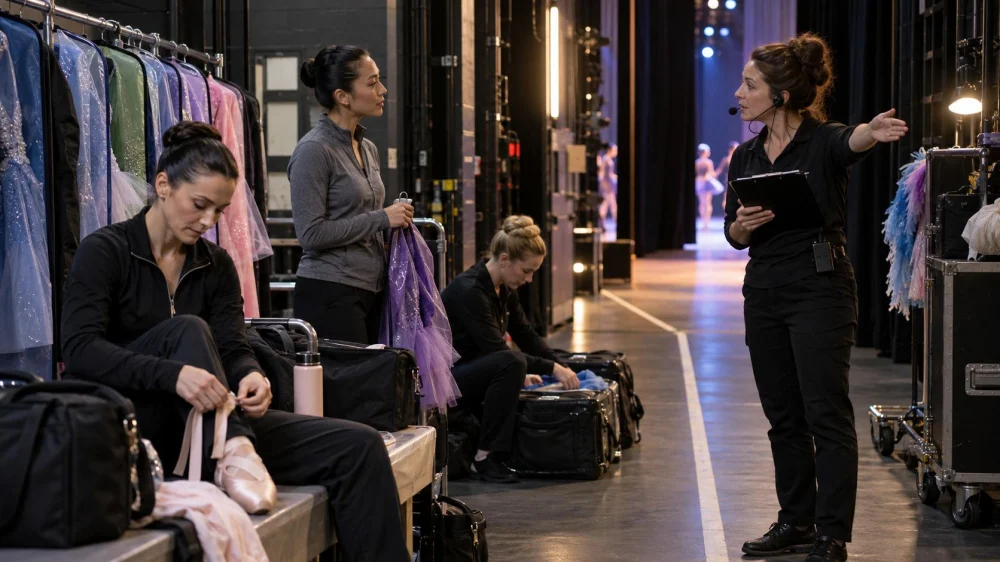
Dance Recital Backstage Etiquette: Space, Sound, and Cues
On this page
Quick answer
Good backstage etiquette keeps dancers ready without disrupting the performance. Arrive with labeled costumes and required supplies, use only your assigned area, keep pathways and exits clear, speak quietly, and listen for calls. Know the route to the stage, return props and costume pieces immediately, protect everyone’s changing privacy, and tell the stage manager promptly about an injury, missing item, or cue problem.
Backstage includes wings, crossover routes, dressing rooms, holding areas, prop tables, quick-change spaces, and technical work zones. It is a working environment, not an audience lounge. The venue and production team’s instructions take priority because layouts and procedures differ.
Prepare before arrival
Read the call sheet or recital information for arrival time, entrance, check-in, costume order, hair and makeup expectations, footwear, food rules, supervision, and pickup. Pack by routine rather than placing everything loose in one bag.
- Label costumes, shoes, garment bags, and permitted personal items discreetly.
- Use a checklist for every costume piece, accessory, prop, and shoe.
- Bring approved repair supplies and know who is authorized to make changes.
- Keep water and snacks only where the venue allows them.
- Leave valuables at home or follow the production’s secure-storage plan.
Finish routine preparation early enough to handle a missing item without delaying the call. Do not bring extra guests into controlled backstage areas.
Share limited backstage space
Use the assigned rack, chair, floor marking, or dressing location. Keep bags closed and under control. Costumes should hang where they do not block sprinklers, electrical equipment, doors, mirrors, or walkways.
Warm up only in the designated place. Hallways, stairs, wings, and loading areas may have moving scenery, cables, low light, or people carrying equipment. A large jump, turn, or floor sequence needs enough clear space and permission.
Keep conversation low and devices silent. Sound travels onto the stage, and backstage staff need to hear cues. Applause, cheering, and celebration belong where the production permits them.
Follow cues and traffic flow
Learn the route from holding area to entrance, the waiting position, which side you enter, where you exit, and how you return. Check for one-way traffic or a crossover behind the stage. Never cross the performing area unless directed.
Use this cue sequence:
- Respond promptly to the initial call and finish personal preparation.
- Report to the designated holding point with the complete group.
- Stay quiet and watch the assigned crew member, not the stage action.
- Move to the wing only when called and remain behind curtains or sightlines.
- Enter on the given cue; do not follow music you can barely hear unless that is the planned cue.
- Exit fully, clear the path, and return to the assigned area.
If you miss a call or become unsure, find the responsible staff member. Do not improvise a route through technical areas.
Handle costumes and props
Organize costume changes in performance order. Place shoes and accessories together and keep fasteners closed when stored. For quick changes, confirm who may assist, the exact location, privacy screen, lighting, and where removed pieces go.
Props should live on a marked prop table or assigned rack. Check them visually without playing with them. Return each item to its exact location and report damage rather than hiding it. Never move another group’s prop to make space.
A costume problem should be reported early. Pinning, taping, or altering an item can create a new hazard if done without the right materials or approval. Have a safe fallback plan for an accessory that cannot be secured.
Safety, privacy, and boundaries
Backstage lighting may be dim. Walk, keep shoes on where required, and watch for cables, steps, curtains, weights, and moving scenery. Do not touch rigging, controls, electrical panels, fog equipment, or technical gear.
Do not photograph or record in dressing and changing areas. Obtain permission before posting anyone else backstage. Productions involving minors need clear supervision, authorized access, sign-in and release procedures, and appropriate changing arrangements.
Report pain, illness, a spill, blocked exit, damaged floor, missing person, or unsafe equipment immediately. Performance timing never outranks an emergency instruction. This guide is general; venue safety rules and staff directions control.
Sources and evidence notes
This article reflects common theater and dance-production practice: controlled access, clear pathways, quiet cueing, assigned storage, prop tracking, privacy, and immediate hazard reporting. Specific roles and calls vary by venue and production.
Frequently asked questions
Can I watch other dances from the wings?
Only if staff permit it and there is a designated safe position. Wings are active work areas, and extra people can block performers and crew.
Where should I keep my phone?
Follow production policy. Silence it and store it securely away from changing areas, pathways, and prop or costume tables.
What if a costume piece goes missing?
Tell the costume lead or assigned staff member promptly. Check your labeled area without moving other dancers’ belongings and use the approved backup plan.
Can family members help backstage?
Only authorized helpers should enter. Access, credentials, supervision, and changing privacy must be managed by the production.
What if I miss my entrance cue?
Do not run onto the stage at a random moment. Look to the stage manager or wing crew for direction; they understand the safest recovery option.
Conclusion and next steps
Backstage etiquette is practical teamwork. Prepare and label everything, occupy only assigned space, protect silence and pathways, follow the cue chain, and return every item. Learn the venue-specific route and emergency rules at rehearsal so recital day can stay focused, private, and safe.


 On Pointe School of Dance5.0 (1 reviews)
 Swing It Seattle5.0 (150 reviews)
 define/ dance space4.0 (23 reviews)
 Polynesian Club of Fresno5.0 (13 reviews)
 Reach For The Barres5.0 (7 reviews)
 Arthur Murray Dance Studio Ridgewood5.0 (49 reviews)
 The History of Waltz That Boosts Confidence
 Cha Cha Tutorial – What You Need to Know for Beginners and Beyond
 What Is a Ring Dance in High School and How to Prepare for It
 How to Master Ballet: Cultural Origins, Techniques, and Influencers
 How to Master Belly Dance to Improve Flexibility
 Salsa Explained: Common Mistakes to Avoid