Dance Class Hydration: Plan Water Breaks Without Missing Steps
Table of contents
Quick answer
Arrive with a filled, leakproof bottle and drink regularly rather than waiting until you feel intensely thirsty. Place it in the studio's designated area, not on the dance floor. Use scheduled breaks to take comfortable sips, listen for the next instruction, and return without rushing. Heat, humidity, class intensity, clothing, and individual health can require more frequent rest and a cooler environment.
Start before class
Hydration is easier when it is part of arrival, not an emergency halfway through combinations. Drink normally through the day and include fluids with meals. Check the studio's bottle policy, fountain access, room temperature, class length, and whether a long rehearsal has planned breaks. Bring more than you expect to need when refills are unavailable.
Avoid starting class after deliberately restricting fluids. Alcohol can impair coordination and hydration decisions, while a very large drink immediately before jumping or floorwork can feel uncomfortable. The goal is steady preparation, not forcing an exact volume that ignores body size, diet, weather, medicines, and health conditions.
Choose and place the bottle
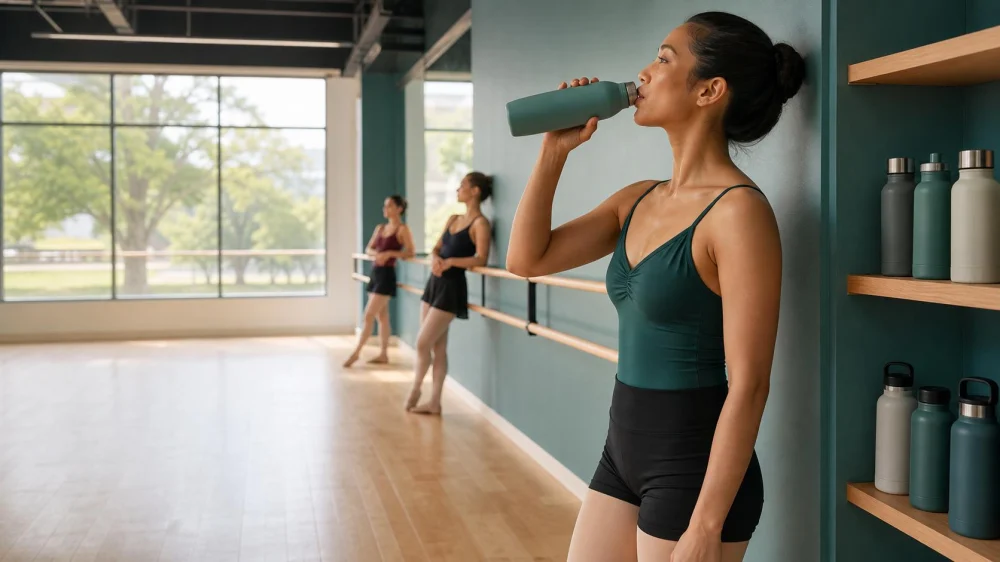
Use a bottle that closes securely, opens quickly, and is clearly identifiable without a loose charm or strap. An insulated bottle can keep water cooler in a warm room. Wash it between uses and do not share mouthpieces. If you add a drink mix, label it for yourself so it is not confused with another dancer's water.
Place the bottle exactly where the teacher or studio designates—usually against a wall, on a shelf, or outside the room. Keep it away from entrances, barres, mirrors, speakers, electrical equipment, and travel paths. Wipe a spill immediately and alert the teacher so no one turns, jumps, or slides through a wet spot.
Use water breaks well
When the teacher calls a break, walk to the bottle instead of sprinting across moving dancers. Take manageable sips, close the bottle, and listen for timing or choreography notes. Return to your place with enough time to reorient. A water break is also a useful moment to notice unusual fatigue, dizziness, cramping, headache, or loss of concentration.
If you need water before the scheduled break, signal the teacher and step out safely rather than leaving without notice or pushing through distress. In partner work, tell your partner so they do not begin a lift or traveling pattern. Teachers can plan more frequent short pauses during intense, long, hot, or mask-heavy sessions.
Adjust for heat and intensity
Hot, humid rooms and vigorous movement increase heat strain. CDC advises athletes exercising in heat to drink more water than usual, pace activity, and stop if they feel faint or weak. Move to a cool place when symptoms develop. Fans and air conditioning can help, but airflow does not guarantee the room is cool enough.
New dancers, people returning after a break, and anyone not accustomed to heat may need a slower buildup. Clothing and costumes that trap heat can increase stress. Modify pace, shorten work intervals, lengthen rest, or move rehearsal to a cooler time or room. Do not use “sweating more” as proof of a better workout.
Know when water may not be enough
For many ordinary classes, water and regular meals are sufficient. Longer sessions, heavy sweating, or sustained work in heat may also involve electrolyte loss. OSHA notes that prolonged work in heat may require access to electrolyte-containing fluids. The appropriate choice depends on duration, sweat loss, diet, health, and professional guidance.
Sports drinks can add sugar, sodium, and calories that are not always needed. Energy drinks are not the same as electrolyte drinks and can contain substantial caffeine or other stimulants. Do not take salt tablets or concentrated supplements without qualified medical advice. People with kidney, heart, blood-pressure, endocrine, or fluid-balance conditions should follow their clinician's plan.
Respond to warning signs
Stop dancing and move to a cooler safe area for faintness, weakness, confusion, severe headache, nausea, unusual clumsiness, chest pain, trouble breathing, collapse, or worsening cramps. Tell the teacher; do not leave a symptomatic dancer alone. Call emergency services for severe symptoms, altered mental status, loss of consciousness, seizure, or another life-threatening concern.
Do not assume every symptom is dehydration or try to fix a serious problem only by drinking. Overconsumption of water can also be dangerous. A dancer who is vomiting, confused, unable to drink, or not improving needs medical evaluation. Follow the studio emergency plan and provide responders with relevant heat, activity, and health information.
Build a studio-friendly routine
Teachers can state the bottle location and break plan at the beginning of class, normalize asking for an additional break, and schedule recovery before complex traveling work. Studios can maintain clear access to potable water, a spill kit, ventilation, and an emergency action plan. Dancers can arrive early enough to fill bottles without delaying warm-up.
For rehearsals, write water breaks into the schedule and assign someone to monitor room conditions and participant wellbeing. During performances, stage managers can confirm backstage drink zones that protect costumes, props, electronics, and floors. Children and dancers needing assistance should have a clear adult responsible for access.
Class checklist
- Drink normally during the day and eat regular meals.
- Bring a clean, filled, leakproof bottle.
- Place it in the designated area off the floor.
- Use breaks for comfortable sips and a symptom check.
- Tell the teacher before stepping out unexpectedly.
- Increase rest and cooling as heat and intensity rise.
- Do not confuse energy drinks with hydration.
- Stop for faintness, weakness, confusion, or severe symptoms.
- Clean spills immediately.
Limitations and medical note
This article provides general educational guidance, not an individualized hydration prescription or medical advice. Fluid and electrolyte needs vary substantially. Follow advice from your healthcare professional, especially if you take medicines or have a condition affecting fluid balance. Studio policy does not override urgent symptoms; stop activity and seek appropriate help.
Frequently asked questions
Should I wait until I am thirsty?
Do not rely only on intense thirst during heat or vigorous activity. Build regular access to water into the class and follow your clinician's advice if you have fluid restrictions.
Is a sports drink necessary for a one-hour class?
Often water and normal meals are enough, but needs vary with heat, intensity, sweating, health, and duration. Sports drinks are not automatically required.
Can I keep my bottle next to me on the floor?
Only if the studio specifically permits a safe location. Bottles and spills are trip and slip hazards, so most belong at the room edge or on a shelf.
What if the teacher does not schedule breaks?
Ask about the plan before class and signal if you need water or feel unwell. A safe class should allow participants to respond to physical warning signs.
Can too much water be harmful?
Yes. Excessive rapid intake can disrupt blood sodium. Do not force large volumes or take salt supplements without professional advice.
Sources and evidence
- Centers for Disease Control and Prevention: Heat and Athletes — advises pacing, drinking more water in heat, monitoring others, and stopping for faintness or weakness.
- Occupational Safety and Health Administration: Water, Rest, Shade — explains frequent hydration, rest, cooling, and electrolyte considerations during prolonged heat exposure.
- NIOSH: Heat Stress Recommendations — covers rest breaks, hydration, acclimatization, and modifying work as heat stress rises.
Next steps
For your next class, fill a clean bottle before leaving home and ask where it belongs when you arrive. Note the planned breaks and room temperature. Take regular comfortable sips, keep the floor dry, and tell the teacher early if heat, dizziness, weakness, cramping, or unusual fatigue changes what you can safely do.



 Sicilia Elower5.0 (7 reviews)
 Trinity Academy of Irish Dance4.0 (11 reviews)
 Khushboo Dance Academy0.0 (0 reviews)
 The Dance Place LLC5.0 (2 reviews)
 Sheryl's School Of Dance5.0 (22 reviews)
 Arts In Motion Dance Studio4.0 (13 reviews)
 Contemporary Dance for Adults – Benefits, Getting Started, and Success Stories
 Can Dance Schools Reopen in NJ? What Parents and Students Should Know
 Top 10 Swing Dance Moves Fitness Routine – Improve Your Fitness with Dance
 Hip Hop That Boosts Confidence – What You Need to Know
 Pole Dance Step by Step Guide: Master the Basics and Advanced Moves
 Shuffle Dance Trending on TikTok: Step by Step Guide for Beginners