
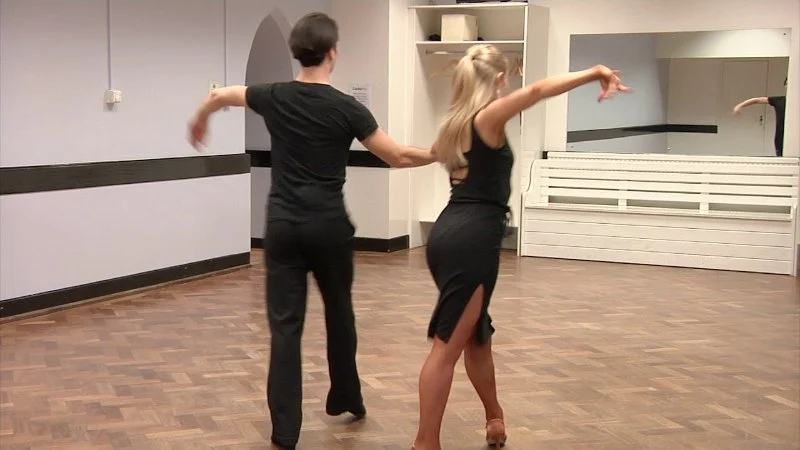
- cha-cha-tutorial-basics-rhythm-foundation - understanding cha cha rhythm and music timing
- cha-cha-steps-footwork-breakdown - learning core cha cha dance steps step-by-step
- cha-cha-body-action-technique - mastering hip motion and posture control
- cha-cha-practice-routine - building consistency and daily training structure
- cha-cha-performance-confidence - applying cha cha in real dance settings
Cha Cha Tutorial – Building Rhythm Before Movement
The Cha Cha is one of those Latin dances that looks playful and effortless—but only when the foundation is solid. Most beginners rush into steps too quickly and miss the real heart of the dance: rhythm. A proper cha cha tutorial always starts with the music, not the feet.
The defining sound of Cha Cha is the “2-3-cha-cha-cha” count, which sits naturally inside Latin percussion patterns. When dancers first hear it, they often try to match steps mechanically. But experienced dancers think differently—they listen for the pulse first, then let the body respond.
In early training sessions at American Dance Academy, instructors often spend the first class without teaching any full steps. Instead, students clap, shift weight, and walk to the beat. It may feel simple, but this is where real control begins.
Cha Cha Tutorial – Understanding the Core Timing System
Before mastering movement, it’s important to understand how Cha Cha timing works in practice. Unlike some ballroom dances with smooth rises and falls, Cha Cha stays grounded and sharp.
The standard rhythm pattern is:
Slow – Slow – Quick Quick – Slow
This structure gives Cha Cha its signature “playful delay.” Many beginners struggle because they rush the “quick quick” section, which breaks the dance’s character.
A useful mental trick is imagining you are “resisting the beat.” Instead of stepping immediately, you slightly delay movement, creating tension before release. This is what gives Cha Cha its bounce and personality.
Cha Cha Tutorial – Step Breakdown for Beginners
Basic Forward and Back Weight Transfer
Every cha cha tutorial begins with weight transfer. Stand naturally, feet under hips. Step forward with your left foot on “slow,” return weight, then repeat with controlled intention. The key is not distance but control.
Many beginners step too far forward, causing imbalance. Professional dancers keep steps compact, allowing faster recovery and smoother transitions into cha-cha-cha triple steps.
Cha Cha Triple Step Pattern
The signature movement of Cha Cha is the triple step: cha-cha-cha. It usually occurs between slow counts and acts as a connecting bridge.
Think of it as:
side – close – side (or replace depending on direction)
This is where foot precision matters. Each step should be light, quick, and close to the floor. Sloppy footwork is the most common beginner issue.
Side Basic Movement Coordination
The side basic introduces lateral movement. Instead of forward-back motion, dancers shift weight left and right while maintaining rhythm consistency.
When practiced correctly, it begins to feel like a gentle pendulum swing in the hips, which naturally connects to Cha Cha styling.
Cha Cha Tutorial – Body Action and Styling Secrets
One of the biggest misconceptions is that Cha Cha is only footwork. In reality, body action defines the dance far more than steps.
Hip movement in Cha Cha comes from controlled knee bending and straightening—not forced rotation. When one knee bends, the opposite hip naturally releases. This creates the signature Latin motion.
Beginners often exaggerate hip movement, which makes the dance look artificial. A better approach is subtle control. The hips follow the body, not the other way around.
At American Dance Academy, instructors often correct students by focusing on posture first: chest lifted, shoulders relaxed, core engaged. Once alignment is correct, hip action appears naturally.
Cha Cha Tutorial – Real Practice Story from a Beginner Student
A student named Melissa joined a beginner Latin class after watching social media dance clips. She believed Cha Cha was mostly fast foot tapping and hip shaking. Her first week was frustrating—she couldn’t stay on beat and constantly lost balance.
The breakthrough came when her instructor removed all choreography and made her walk across the studio counting slowly. Only after internalizing rhythm did she return to Cha Cha steps. Within three weeks, her movement transformed from stiff to fluid.
This story is common. Cha Cha is not learned through speed—it is learned through patience and repetition.
Cha Cha Tutorial – Building a Daily Practice Routine
Consistency is what turns basic steps into real dancing ability. A structured practice routine does not need to be long, but it must be intentional.
A simple daily structure includes:
1. Rhythm training (5–10 minutes) – clapping or stepping to Cha Cha music without choreography
2. Footwork repetition (10–15 minutes) – practicing basic steps slowly
3. Mirror practice (5–10 minutes) – checking posture and body alignment
This combination builds muscle memory while preventing bad habits from forming.
Even advanced dancers return to basics regularly because Cha Cha is rhythm-first, not trick-based.
Cha Cha Tutorial – Common Mistakes That Slow Progress
Overthinking Foot Placement
Many beginners mentally count every foot position instead of feeling rhythm. This creates stiffness. The solution is to focus less on “where” and more on “when.”
Ignoring Upper Body Control
Cha Cha is often reduced to feet only. Without upper body awareness, movement looks disconnected. The torso should remain active and responsive.
Rushing the Cha-Cha-Cha Pattern
Speeding through triple steps destroys timing. Slower, cleaner execution always produces better results.
Cha Cha Tutorial – From Practice to Real Dance Floor Confidence
Transitioning from practice to social or performance settings can feel intimidating. However, Cha Cha becomes easier when you stop thinking of it as “steps” and start treating it as conversation with music.
In real dance environments, no two songs feel exactly the same. Dancers who adapt rhythmically rather than mechanically always stand out.
Advanced students at American Dance Academy often train by dancing to different tempos of Cha Cha music to build adaptability. This helps them stay confident even when music changes unexpectedly.
 Pacific Ballet5.0 (1 reviews)
 Dance With Me Fort Worth4.0 (44 reviews)
 Tumbao Latin Dance5.0 (29 reviews)
 Meraki Dance Expressions5.0 (2 reviews)
 Central Pennsylvania Dance Workshop5.0 (3 reviews)
 TAI - Turners All-Stars of Indiana4.0 (30 reviews)
 Pole Dance for Kids – Everything You Should Know
 Top 10 Hip Hop Moves for Kids
 Shuffle Dance for Couples – Complete Guide
 How to Master Ballroom Dance Workout Benefits for a Healthier, More Energized You
 Bollywood Dance to Improve Flexibility – Complete Guide for Beginners
 Are There School Dances in 7th Grade? Everything Parents & Students Should Know