Your First Private Dance Lesson: Set a Useful Goal
On this page
Quick answer
For a first private dance lesson, choose one observable goal, share your experience and constraints, and bring music or video only if the teacher requests it. Expect assessment as well as instruction. Ask for one or two priorities, practice them briefly, and leave with a written next step rather than trying to transform every part of your dancing in one session.
Why it matters
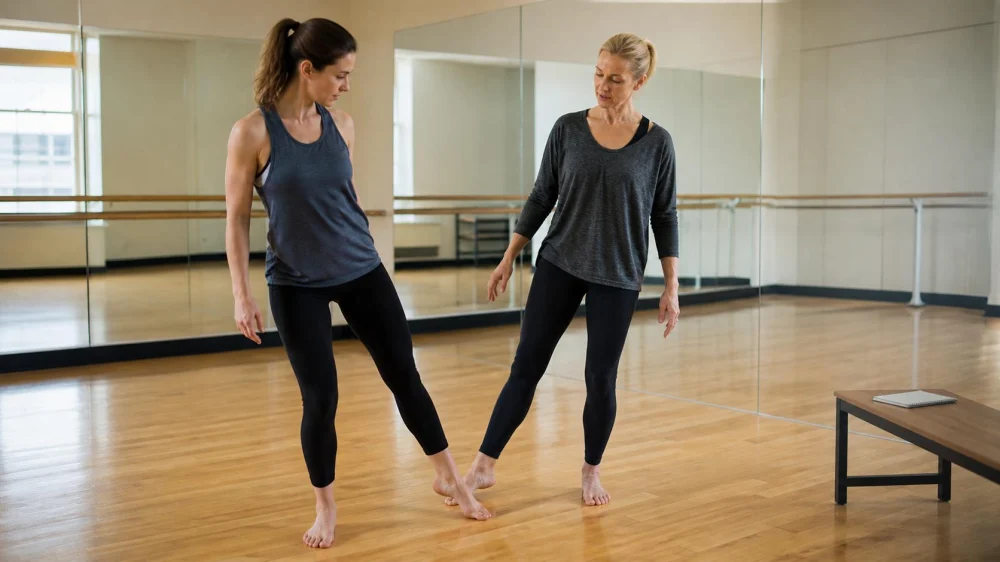
A private dance lesson is one-to-one or small-group instruction tailored to a dancer's goal, movement, and questions. It can accelerate focused feedback, but value depends on teacher fit, clear scope, safe communication, and practice between sessions.
This guide is for U.S. recreational dancers booking a private lesson. Rates, cancellation terms, studio rental, filming, touch, guardian, and payment policies vary. Private instruction does not replace medical rehabilitation or licensed clinical care.
Practical checklist
- Define one goal such as clarifying a turn, improving timing, preparing a short section, or choosing a class level.
- Confirm the teacher's style expertise, lesson length, location, price, studio fee, and cancellation policy.
- Describe current experience, injuries or limitations, learning preferences, and the date of any performance goal.
- Ask whether to bring shoes, music, choreography video, notes, a partner, or nothing beyond normal class gear.
- Clarify consent for hands-on correction and whether recording is allowed.
- Plan a short practice window after the lesson while feedback is fresh.
- Choose a public or established studio setting and follow guardian policies when relevant.
Step-by-step plan
- Write a concrete outcome. 'Make the weight change in this turn consistent' gives the teacher more direction than 'get better at dance.'
- Share useful context before moving. Explain training history, recent break, footwear, surface, pain, and any deadline without self-diagnosing an injury.
- Let the teacher observe. A brief warm-up or attempt may reveal a different first priority from the one you expected.
- Work on a small change. Ask what to feel, see, hear, or count; then repeat at reduced speed before adding full tempo.
- Check understanding. Explain the correction back in your own words or demonstrate it once without prompting.
- Capture the assignment. With permission, write notes or record a short reference that includes the exercise, dose, and warning signs—not the entire lesson by default.
- Evaluate fit afterward. Consider clarity, respect, consent, safety, and whether the next step matches your goal before booking a package.
Use a one-page lesson note: goal, starting observation, two cues, one exercise, practice frequency, and next question. Avoid collecting so many cues that you cannot test any of them.
Limits and warning signs
One lesson cannot establish long-term technique, guarantee audition or performance outcomes, or safely resolve unexplained pain. Teaching style and dancer needs differ. More correction is not automatically better if fatigue or information overload reduces movement quality.
Stop for sharp, worsening, or unusual pain, dizziness, instability, or neurological symptoms. Seek an appropriate licensed health professional for injury assessment. End or report instruction that ignores consent, boundaries, guardian rules, or studio safety policy.
Frequently asked questions
Do I need to be advanced for a private lesson?
No. Beginners can use a private lesson to understand foundations, terminology, or class fit, provided the teacher welcomes that level.
Should I buy a package at the first lesson?
Not necessarily. Review teacher fit, policies, goals, and realistic practice time before committing.
Can I film the lesson?
Only with permission and under studio policy. A short approved reference clip may be more useful than recording everything.
What if I have several goals?
List them, then ask the teacher which one creates the best starting point. Focused progress usually requires sequencing.
Sources and evidence
The process reflects common effective-instruction practices: define an observable goal, assess current performance, give limited actionable feedback, practice deliberately, and protect consent and safety. Teacher and studio policies control the session details.
Conclusion and next steps
Write one sentence describing what you want to do more consistently, then send the teacher the relevant experience and constraints. Leave the lesson with one exercise you can repeat safely and a clear question for the next session.
 Academy Of Odissi Dance Tampa0.0 (0 reviews)
 Dance with Alexis5.0 (6 reviews)
 Warwick Center for the Performing Arts4.0 (25 reviews)
 Inspire Dance Studio5.0 (25 reviews)
 Fred Astaire Quad Cities / Addicted To Ballroom4.0 (36 reviews)
 Let's Dance4.0 (24 reviews)
 Samba for Beginners – Complete Guide
 Do 6th Graders Have School Dances? What Students & Parents Should Know
 A Dance School Has 54 Students Who Learn Salsa: The Power of Dance Education
 Ballroom Dance for College Students: Tips from Experts
 Are Dance Schools Considered Dance Halls? Exploring the Difference
 Bollywood Dance for Couples: Common Mistakes to Avoid