
- samba-foundation-rhythm-posture - Understanding core principles of samba for adults
- common-samba-beginner-errors - Technical mistakes most adult learners make
- rhythm-timing-latin-dance-control - Why timing is the hardest part of samba dance mistakes
- body-isolation-technique-samba - Fixing movement coordination issues in adult samba technique
- confidence-performance-improvement - How to refine samba performance over time
Why Samba for Adults Feels Simple at First but Gets Tricky Fast
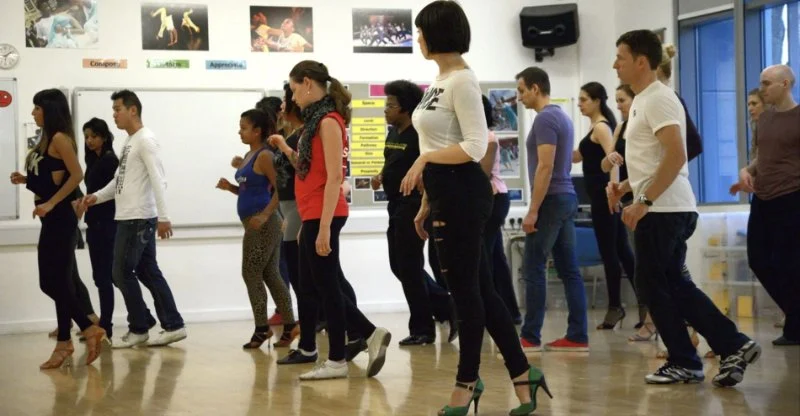
Many adults step into samba for adults classes thinking it will be all about energy, music, and fun footwork. And while that’s partly true, the challenge appears quickly: samba is not just a dance style, it’s a coordination system. What looks like effortless bouncing and rhythm actually requires precise control of timing, posture, and body isolation.
The most common situation is this: a beginner feels confident during warm-ups, but once the tempo increases, everything starts to fall apart. Steps become rushed, posture collapses, and rhythm drifts away from the music. These are not random issues—they are predictable samba dance mistakes that almost every adult learner experiences.
Core Mistakes in Samba for Adults That Hold Back Progress
1. Treating Samba Like a Fast Version of Other Dances
One of the biggest misunderstandings in adult samba technique is assuming it works like salsa or ballroom with higher speed. In reality, samba rhythm training relies on a unique bounce action that is constantly active, even when you are standing still.
When learners skip this foundational bounce and instead focus only on foot placement, the dance loses its identity. The movement becomes stiff and disconnected from the music.
2. Ignoring the Bounce Mechanism
The samba bounce is not optional—it is the engine of the entire dance. Without it, steps feel flat and mechanical. Many beginners try to “fake” the bounce using their knees alone, which leads to fatigue and inconsistent timing.
Proper samba rhythm training requires controlled engagement of ankles, knees, and core working together. This creates elasticity in movement rather than forced motion.
3. Overthinking Footwork Instead of Feeling Rhythm
A common samba dance mistake is mentally counting steps too rigidly. While structure is important, samba is heavily musical. Overthinking leads to hesitation, which breaks flow.
Experienced instructors often say that adult learners improve faster when they shift focus from “what step comes next” to “how the rhythm feels in the body.”
Real Studio Story: When a Beginner Finally Broke Through
At one Latin dance workshop, a student in their 40s struggled for weeks with basic samba timing. Technically, they knew the steps. But every time the music started, their movement became rigid and disconnected.
The turning point came when the instructor removed choreography entirely and focused only on bounce and rhythm. For ten minutes, there were no steps—just continuous movement to the beat. At first, it felt uncomfortable and even “too simple.” But gradually, the student began to feel the pulse of samba instead of thinking about it.
Two weeks later, that same student rejoined class and demonstrated noticeable improvement in timing and flow. The difference wasn’t more effort—it was better understanding of rhythm integration, a key principle in samba for adults training.
Fixing Body Coordination in Adult Samba Technique
1. Upper and Lower Body Disconnect
Another frequent issue is separating upper body movement from lower body rhythm. In samba, the torso should remain controlled while the lower body handles bounce and steps.
When both move chaotically together, balance is lost and energy is wasted. Correct adult samba technique teaches stability in the chest and fluidity in the hips and legs.
2. Stiff Shoulders and Locked Posture
Beginners often tense their shoulders while trying to stay “correct.” Ironically, this makes movement less precise. Samba requires relaxed upper-body alignment to allow natural rhythm transfer.
One effective correction is practicing dancing in front of a mirror with reduced arm movement, focusing only on posture flow.
3. Weak Core Engagement
Without core support, samba becomes unstable. The bounce loses structure and timing becomes inconsistent. Core engagement doesn’t mean tightening—it means controlled stability that supports movement without restriction.
Many instructors at American Dance Academy emphasize that improved core awareness is one of the fastest ways to fix samba dance mistakes in adult learners.
Rhythm Training Strategies That Actually Work
Slow Music Practice Before Full Tempo
One of the most effective strategies in samba rhythm training is slowing the music down. This allows dancers to internalize timing without pressure.
Once rhythm becomes natural at a slower pace, speed can be gradually introduced without losing control.
Internal Counting vs External Feeling
While counting helps beginners, overreliance becomes limiting. Advanced learners shift toward internal rhythm perception—feeling the beat instead of calculating it.
Repetition with Minimal Variation
Repetition is essential, but variation should be minimal in early stages. This prevents confusion and allows muscle memory to develop properly.
Why Adult Learners Struggle More—and Progress Differently
Adults learning samba for adults often bring discipline, patience, and focus. However, they also bring habits from daily life—stiff posture, controlled movement patterns, and analytical thinking—that can interfere with natural dance flow.
Unlike children, adults tend to “try to be correct” instead of “feeling correct.” This mental approach creates many beginner samba errors, especially in rhythm-heavy styles like samba.
Once this mindset shifts, progress often becomes surprisingly fast. The body already knows how to move—it just needs permission to respond naturally to music.
Building Long-Term Improvement in Samba Performance
Improvement in samba is not about mastering steps quickly but about building layered coordination. First comes rhythm awareness, then body control, and finally expressive movement.
Dancers who stay consistent often notice that samba eventually stops feeling like a structured routine and starts feeling like a conversation with music. That transition is the real milestone in adult samba technique.
Programs and structured guidance from places like American Dance Academy often help accelerate this process by combining technical drills with musical interpretation training.
 Miss Luluh Dance0.0 (0 reviews)
 AMA Academy of Performing Arts4.0 (39 reviews)
 Wonderfully Made Dance5.0 (48 reviews)
 Serenity Movement Studio5.0 (7 reviews)
 Company 'N Tempo Music, Theatre & Dance Centre5.0 (20 reviews)
 Kaliente Dance Studio4.0 (42 reviews)
 Did Henry Ford Promote Square Dancing in Schools? Discover the Legacy
 Samba for Adults: Common Mistakes to Avoid
 Shuffle Dance for Couples – Complete Guide
 Jazz Dance Step by Step Guide – What You Need to Know
 Ballroom Dance Every Dancer Should Know – Complete Guide
 Why Dance Schooling Is Important for Growth, Confidence, and Expression