
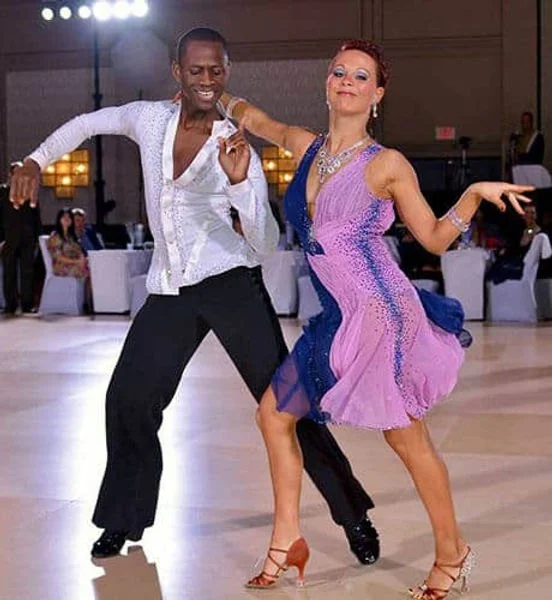
- cha-cha-basic-step-foundation - understanding timing, rhythm, and weight transfer
- cuban-motion-technique - mastering hip action and body coordination
- forward-and-back-basic - building directional control and balance
- side-basic-and-traveling-steps - developing floor coverage and flow
- turns-and-variations - adding styling and complexity to cha cha movement
Why Cha Cha Feels Simple at First but Gets Surprisingly Complex
Cha Cha is one of those Latin dances that looks playful and easy from the outside—quick steps, lively rhythm, and expressive movement. But once you actually step onto the floor, you realize it demands precision, timing, and body control that beginners often underestimate.
The rhythm alone—“two, three, cha-cha-cha”—creates a unique challenge. It’s not just about stepping; it’s about syncing weight shifts, hip action, and musical timing all at once. This is why breaking down Cha Cha moves step by step is essential for real progress.
Many dancers discover that once they understand the structure, Cha Cha becomes not only easier but far more enjoyable.
1. Basic Cha Cha Step Foundation
Understanding the Rhythm Structure
The foundation of Cha Cha is its signature rhythm: slow, slow, quick-quick-quick. This creates the iconic “cha-cha-cha” syncopation that defines the dance style.
Beginners often rush this rhythm, but the key is to stay grounded and controlled, letting each step land clearly on the beat.
Weight Transfer and Control
Every Cha Cha step depends on proper weight transfer. If your weight is not fully committed to one foot, transitions will feel unstable and rushed.
A real beginner mistake is floating between steps instead of settling into them. Fixing this alone improves clarity dramatically.
2. Cuban Motion Technique
Cuban motion is the heartbeat of Cha Cha. It refers to the natural hip movement created by bending and straightening the knees in sync with weight shifts.
Instead of forcing hip movement, dancers allow it to emerge naturally from the legs. This creates fluid, rhythmic styling without stiffness.
A common student experience in Latin dance classes is overthinking hip motion, which makes movement look artificial. Once relaxation improves, Cuban motion becomes instinctive.
3. Forward and Back Basic Step
Directional Control in Cha Cha
The forward and back basic step teaches directional awareness. Stepping forward with one foot while maintaining rhythm helps build spatial control.
This move is especially important for partner dancing because it establishes connection and shared timing.
Common Mistakes in Beginners
Many dancers lean too far forward or backward instead of keeping posture upright. Cha Cha requires grounded movement, not exaggerated leaning.
4. Side Basic and Traveling Steps
Side steps introduce lateral movement, which expands your ability to travel across the floor. This is where Cha Cha starts feeling more dynamic and social.
Traveling steps also help dancers interact better in crowded dance floors, especially during social dance events where space is limited.
A common improvement point is maintaining rhythm while moving sideways, which requires coordination between upper and lower body.
5. The Cha Cha Rock Step
The rock step is a foundational movement where weight shifts back and forward quickly, creating momentum for the next sequence.
It may seem simple, but timing is everything. If rushed, it disrupts the entire rhythm chain.
Experienced instructors often use this step to reset students’ timing when they drift off beat.
6. Cross-Body Lead Variation
This move introduces partner interaction and directional change. It allows one dancer to guide the other across the line of dance smoothly.
In social dance settings, this is one of the most frequently used patterns because it creates flow and prevents crowding.
7. Cha Cha Turns
Spot Turns and Balance Control
Turns are where Cha Cha becomes visually exciting but technically demanding. Spot turns require core stability and precise spotting technique.
Beginners often lose balance because they rotate too quickly without a fixed visual reference point.
Building Confidence in Spins
Start with slow rotations before increasing speed. Controlled practice reduces dizziness and improves consistency.
8. New York Style Break Step
This step involves opening and closing body position with sharp direction changes. It adds attitude and expression to Cha Cha.
It is often used in performances to highlight musical accents and create visual contrast.
9. Lock Steps and Syncopation Variations
Lock steps add complexity by crossing feet tightly in rhythm. They require precise timing to avoid imbalance.
Syncopation variations allow dancers to play creatively with timing, making the dance more expressive and less mechanical.
10. Styling and Musical Interpretation
Once technical basics are mastered, styling becomes the final layer. This includes arm movement, body expression, and musical interpretation.
A well-known observation in dance communities is that advanced Cha Cha dancers don’t just execute steps—they interpret music visually.
This is often where dancers develop their personal identity in Latin dance.
Real Dance Journey Example: From Stiff Steps to Fluid Movement
A beginner student once joined a Latin dance workshop with zero experience in Cha Cha. At first, the steps felt mechanical and disconnected. However, after focusing on rhythm clarity and Cuban motion rather than speed, their movement transformed within weeks.
The biggest breakthrough wasn’t learning more moves—it was slowing down and refining basics. This is a common turning point for many dancers.
Stories like this show that Cha Cha mastery is less about complexity and more about precision and musical awareness.
How to Improve Cha Cha Faster in Real Practice
Start with Rhythm Before Footwork
If rhythm is unclear, even perfect footwork will look incorrect. Always prioritize timing first.
Practice Without Music, Then Add Music
Breaking movements down without music helps build control. Music is then used to refine expression.
Repeat Small Sequences Instead of Full Routines
Short, focused practice loops improve muscle memory more effectively than long combinations.
Where Better Cha Cha Learning Begins
Mastering Cha Cha is a journey that blends rhythm, coordination, and expression. Once the foundation is strong, every movement becomes more natural and enjoyable.
For dancers looking to refine technique, explore structured lessons, and improve social dance confidence, American Dance Academy offers resources and guidance designed to help dancers grow from beginner to expressive performer.
 Dance Explosion5.0 (27 reviews)
 Dance Image4.0 (238 reviews)
 The House5.0 (4 reviews)
 Vibe Dance Complex5.0 (2 reviews)
 Gotta Dance4.0 (17 reviews)
 INSPIRATIONS DANCE & GYMNASTICS4.0 (8 reviews)
 Bollywood Dance Tutorial: Common Mistakes to Avoid for Better Performance
 Do Colleges Have School Dances? Exploring Campus Dance Culture
 Samba for Kids – Complete Guide
 A Step Above School of Dance LLC in Moore, OK – Your Go-To Dance Academy
 Top 10 Bachata Moves for Couples to Improve Partner Dance Skills
 Why Waltz Is a Popular Fitness Routine – Benefits of Waltzing for Health