Dance Class Dress Code: Check Before Buying New Gear
On this page
Quick answer
Before buying dancewear, ask the studio for the exact class dress code, approved colors and styles, shoe model or sole, hair rules, performance requirements, and whether a first class has a temporary option. Choose clothing that lets the teacher see alignment without restricting movement. Label every item, test it through full movement, and keep receipts until the instructor confirms the fit.
This guide is for U.S. students and caregivers preparing for recreational or pre-professional dance classes. Requirements vary by studio, genre, age, level, teacher, recital, and safety policy. The studio’s current written instructions control.
Why dress codes vary
A dance class dress code sets clothing, shoe, grooming, and accessory expectations for a particular class. It may support safe movement, let instructors see joint alignment, reduce distraction, create uniformity, prepare students for performance practice, or protect a specialized floor.
Ballet programs may specify leotard color, tights, shoes, and hair. Tap classes may control shoe type to protect floors and produce consistent sound. Hip-hop classes may allow looser street-inspired clothing but prohibit outdoor shoes. Ballroom, jazz, contemporary, musical theater, cultural forms, and adaptive classes each have different functional needs.
Do not infer rules from a website photo. Images may show costumes, older policies, another level, or promotional styling. Obtain the current class-specific list from registration materials or staff.
Questions to ask the studio
- Is there a written dress code for this exact class, level, day, and teacher?
- Which garment types, colors, sleeve or leg lengths, and underlayers are required?
- Is a specific brand, style number, or approved retailer required, or are equivalents allowed?
- What shoe type, color, sole, heel, width, and fastening are permitted?
- Should shoes be fitted by the instructor or a specialist before use?
- Are outdoor shoes prohibited in the studio?
- How should long hair, bangs, braids, locs, head coverings, and hair accessories be secured?
- Are watches, fitness trackers, glasses, earrings, or other jewelry allowed?
- What temporary clothing may a new student wear for a trial or first class?
- Are there sensory, medical, religious, cultural, gender-expression, or disability accommodations?
- Will recital or exam attire be different from weekly class clothing?
Ask early enough to order or exchange items. If a uniform retailer is suggested, confirm whether the studio receives a benefit and whether alternatives are accepted.
Choose useful class clothing
Prioritize movement, visibility, coverage, temperature control, and confidence. Test the outfit by raising both arms, bending, lunging, squatting, turning, jumping lightly, and sitting on the floor. It should stay in place without pinching, riding up, falling down, or exposing more than the dancer expects.
Close-fitting does not have to mean uncomfortable. Seams should not rub, waistbands should stay secure without restricting breathing, and fabric should stretch in every direction required by the class. Avoid clothing that hides feet or catches fingers during partnering.
Layer strategically. A fitted warm-up top, wrap, leg warmers, or pants may be useful before class, but the teacher may ask students to remove layers after warming up so alignment remains visible. Confirm what may stay on.
Check opacity under bright light and full stretch. Test sweat behavior and laundering at home. Strong fragrance, loose glitter, shedding fibers, and floor-length hems can affect classmates or the studio surface.
For children, choose pieces the dancer can manage independently for bathroom breaks when age-appropriate. A complicated costume-like outfit is not useful daily classwear.
Confirm shoes before purchase
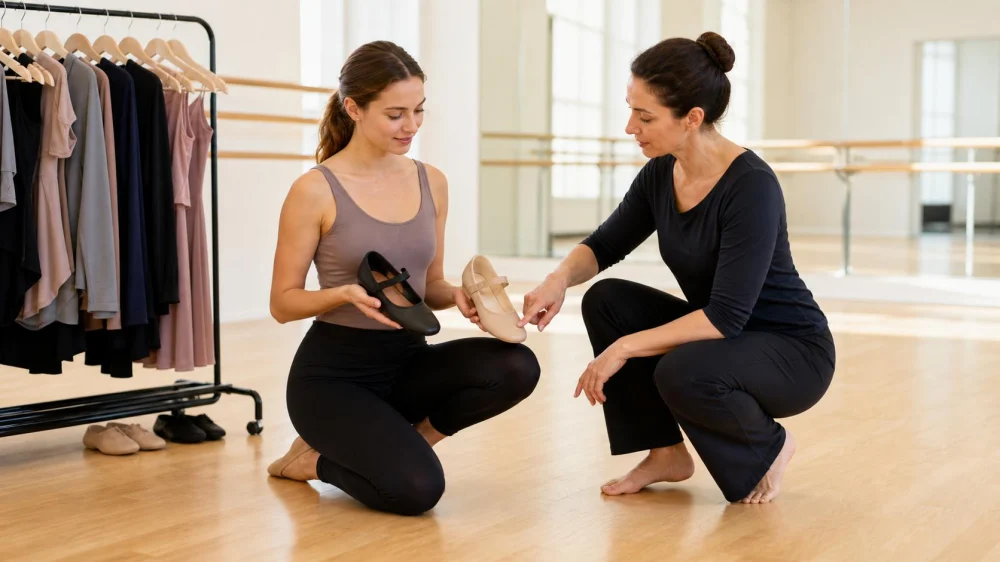
Dance shoes are technical equipment, and the correct shoe depends on the form, floor, foot, and level. Do not buy only by street-shoe size; sizing systems differ, and some shoes stretch.
Before buying, confirm:
- full sole or split sole;
- leather, canvas, synthetic, suede, rubber, or another required material;
- lace, elastic, buckle, slip-on, or strap configuration;
- heel height and shape;
- color and finish;
- width and toe shape;
- whether taps, plates, screws, or protectors are permitted; and
- whether the shoe is indoor-only.
Walk, point, flex, rise, and perform basic class movements during fitting if the retailer permits. The shoe should feel secure without numbness, sharp pressure, heel slipping, or curled toes. A child’s shoe should not be dangerously oversized “for growth.”
Pointe shoes require individualized fitting and explicit teacher approval. Do not begin pointe work or buy pointe shoes based only on age, online advice, or appearance.
Hair, jewelry, and small details
Hair should stay out of the face and remain secure through turns and jumps. The required style may be a bun, ponytail, braids, twists, or another controlled option. Use pins, elastics, nets, or head coverings that stay in place without sharp exposed parts.
Jewelry can catch on clothing, hair, partners, or equipment. Remove dangling earrings, necklaces, bracelets, rings, and loose accessories when the policy requires. If an item cannot be removed for medical, religious, or cultural reasons, discuss a secure accommodation before class.
Trim fingernails as appropriate for partnering and floor work. Keep toenails maintained for closed shoes without cutting so aggressively that skin is injured. Cover open wounds securely and tell the teacher if movement should be modified.
Bring a labeled water bottle, required shoes, small towel, spare hair supplies, and necessary medical items. Keep street shoes and wet clothing separate from dance shoes.
Fit, access, and important limits
A dress code should not force a student to ignore pain, breathing restriction, skin reactions, sensory distress, mobility needs, medical devices, or religious practice. Contact the studio privately and early to discuss what functional goal the rule serves and what alternative can meet it.
Adaptive options may include different fastenings, softer seams, compression preferences, alternate footwear, head coverings, glasses straps, prosthetic or orthotic accommodations, accessible changing arrangements, or clothing that supports a medical device. A qualified clinician or device professional should guide medical fit questions.
Stop using an item that causes numbness, tingling, broken skin, significant pain, circulation change, breathing difficulty, or instability. Blisters and persistent pressure are not proof that a shoe is “breaking in correctly.”
Do not permanently alter, sew, cut, dye, or mark expensive gear until the teacher approves the model and fit. Label removable tags or use a method allowed by the return policy.
Frequently asked questions
What should I wear to a trial class?
Ask the studio. A common temporary option is fitted, stretchy clothing that allows movement and lets the teacher see alignment, plus approved clean footwear.
Do I need a leotard for every dance style?
No. Ballet programs often use one, but requirements vary. Other classes may specify different clothing.
Can dance shoes be worn outside?
Usually indoor-only shoes should stay indoors to protect the sole and studio floor. Carry them and change inside.
Should a child buy shoes with room to grow?
Only within the safe fit guidance for that shoe. Excess length can reduce control and cause tripping or rubbing.
Can I wear a smartwatch?
Ask the teacher. It may be prohibited for safety, distraction, costume consistency, or recording/privacy reasons.
What if the required item is unaffordable?
Ask discreetly about approved alternatives, used-item exchanges, rentals, scholarships, or delayed purchase. Do not assume the most expensive version is required.
Sources and evidence notes
This guide reflects common studio practice and general clothing and footwear safety principles. Dance dress codes are not standardized nationally, and the article does not claim that a particular studio requires any listed item.
For medical devices, foot pain, skin conditions, or disability accommodations, use advice from the relevant qualified professional together with the studio’s functional requirements.
Conclusion and next steps
Get the exact class policy before shopping, identify the function behind each requirement, and confirm shoes with the teacher or fitter. Test clothing through full movement, keep receipts, label only after approval, and pack small backup items. When fit, cost, sensory needs, medical equipment, or religious practice creates a conflict, ask early for an alternative that preserves both access and class safety.
 Drumcliffe Irish Arts5.0 (4 reviews)
 The Vickie Roberson Theatre4.0 (74 reviews)
 Let's Dance, Inc4.0 (26 reviews)
 Axé Capoeira Tucson at Studio Axé5.0 (50 reviews)
 All That Dance Co4.0 (250 reviews)
 Mountain Home Ballroom5.0 (17 reviews)
 Can Dance Schools Reopen in NJ? What Parents and Students Should Know
 Top 10 Ballet Moves Workout Benefits for Strength, Flexibility, and Balance
 The History of Swing Dance Tutorial
 Dance Notes After Class: Build a Useful Practice Log
 Do Colleges Have School Dances? Exploring Dance Life on Campus
 Top 10 Contemporary Dance Moves to Try in 2025