
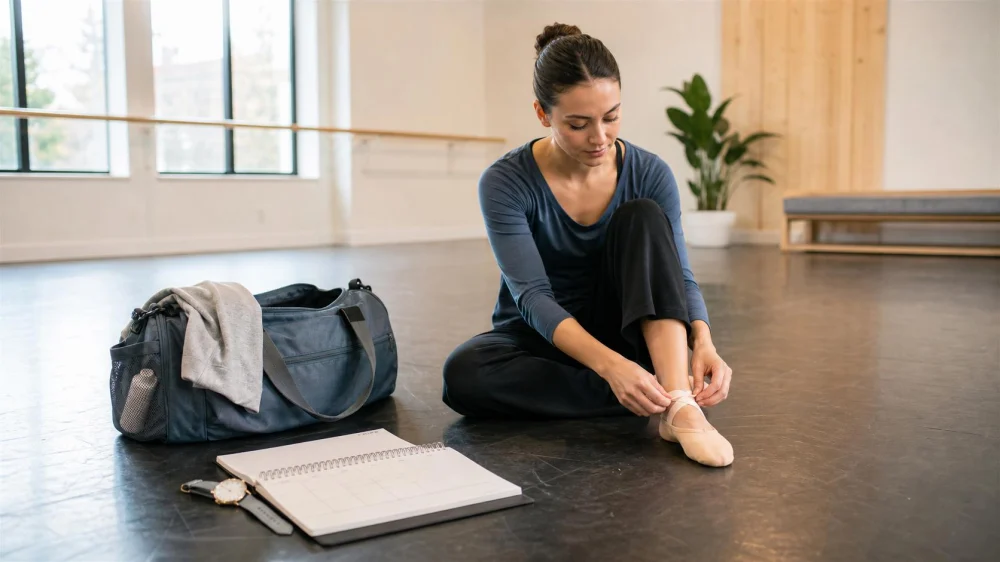
How to Build a Dance Class Schedule You Can Sustain
On this page
Quick answer
A sustainable dance schedule is one you can repeat through ordinary work, school, family, and travel weeks. Begin with one dependable class, count the commute and preparation time, and leave recovery space. Add a second session only after three or four weeks of consistent attendance. The best schedule supports your goal without making every missed class feel like a crisis.
This guide is for adults and families in the United States comparing class times at studios, schools, community programs, and dance halls. It is general planning guidance, not a substitute for advice from a qualified health professional or an instructor who knows your training history.
Start with your real weekly capacity
A dance schedule is the complete block of time required to attend and recover from training, not just the advertised class length. A 60-minute lesson may use two hours once you include changing clothes, travel, parking, check-in, and the trip home.
Choose an ordinary week rather than your most motivated week. Mark fixed obligations first: work shifts, school, caregiving, meals, sleep, and regular appointments. Then look for a repeatable block with a small buffer on both sides. A class that begins ten minutes after work ends is rarely a reliable choice, even when the studio is nearby.
Before enrolling, answer these questions:
- Can I arrive 10 to 15 minutes early without rushing?
- Is the route realistic during the traffic conditions I will normally face?
- Will the class end early enough for my usual sleep routine?
- Do I have time to eat and hydrate appropriately?
- Who handles transportation or childcare when plans change?
- Does the studio allow makeups, transfers, or drop-ins?
If several answers depend on perfect conditions, the time slot is fragile. Look for a different day, a closer location, or a lower-commitment format.
Match class frequency to your goal
Your goal should determine the minimum useful frequency. More classes are not automatically better if fatigue or scheduling problems make attendance inconsistent.
- Recreation and social connection: one class each week can provide a dependable rhythm and enough continuity to enjoy the activity.
- General skill development: one class plus one short, focused practice session may be more sustainable than adding another long commute.
- Preparing for a performance: rehearsals, choreography review, costume calls, and technical sessions can temporarily raise the weekly commitment. Ask for the full calendar before agreeing.
- Cross-training or fitness: place demanding dance sessions around other workouts so the same joints and muscle groups are not heavily loaded every day.
- Competitive or pre-professional study: frequency and progression should be planned with the instructor. Technique, conditioning, recovery, and injury history all matter.
For a beginner, one predictable weekly class is often the best place to start. It is not ideal for someone working toward a near-term performance that has specific rehearsal requirements. Conversely, a multi-day program may fit an experienced dancer but overwhelm a newcomer still learning how their body responds.
Build a balanced dance week
Use a simple sequence to make the schedule concrete:
- Anchor one class. Select the time with the fewest conflicts and the easiest journey.
- Add the hidden time. Put travel, changing, parking, check-in, food, and shower time on the calendar.
- Protect recovery. Avoid stacking unfamiliar high-impact classes on consecutive days until you know how you respond.
- Place a short practice block. Ten to twenty minutes of purposeful review may help you remember material without creating another major commitment.
- Keep one flex window. Reserve an alternate practice time or identify the studio's makeup option before you need it.
- Review after four weeks. Judge attendance, energy, enjoyment, and progress before adding another class.
A sample beginner week might include a Tuesday evening technique class, a brief Saturday review at home, and no other new dance sessions. The specific days do not matter; the useful pattern is instruction, recovery, and manageable review.
Test the full logistics
Before buying a long package, run a door-to-door test at the actual class time. Check traffic, public transportation frequency, parking rules, building access, and the walk from the entrance to the studio. In a large facility, finding the correct room can add meaningful time.
Ask the program for practical policies in writing. Useful details include the cancellation cutoff, expiration date for class credits, makeup eligibility, waitlist process, holiday closures, weather procedures, and whether the instructor or room can change. Families should also confirm pickup rules and who may sign a child out.
For online classes, test the floor area, camera angle, internet connection, sound, and lighting. A virtual class removes the commute, but it still needs setup time and a suitable surface. Stop if the space makes movement unsafe.
Watch for warning signs
Review the plan if you regularly arrive late, skip meals, lose sleep, rush through unsafe traffic, or miss other important commitments. Persistent soreness, reduced coordination, unusual fatigue, or dread before every class can also mean the load or format needs adjustment.
Use a decision rule instead of relying on guilt: if you miss two of four classes for predictable scheduling reasons, change the time slot or commitment level. If you attend consistently but feel physically worse, speak with the instructor and consider guidance from an appropriate healthcare professional.
A schedule is also a poor fit when the cost of missed sessions creates pressure to train while ill or injured. In that situation, a drop-in class, shorter enrollment period, or program with flexible makeup policies may be better.
Limitations and important notes
- New dancers may need more recovery than they expect, especially after jumping, floorwork, or unfamiliar ranges of motion.
- Children's schedules should leave room for schoolwork, meals, sleep, unstructured time, and transportation delays.
- Pregnancy, a recent injury, a medical condition, or a return after surgery can change what is appropriate. Seek individualized professional advice.
- Performance teams and examination tracks may have attendance requirements that a casual schedule cannot meet. Confirm these before enrolling.
- Studio calendars and policies vary across the United States. Verify current information directly with the program.
Frequently asked questions
How many dance classes should a beginner take each week?
One consistent class is a practical starting point for many beginners. Add frequency based on your goal, recovery, instructor feedback, and ability to attend without disrupting sleep or essential obligations.
Should I schedule two dance classes on the same day?
It can work when the classes are designed to complement each other and you already tolerate the load. For a new dancer, separate days usually make it easier to notice fatigue and retain new material. Ask both instructors when intensity is unclear.
Is a weekend class better than a weekday class?
The better choice is the one with reliable transportation, adequate preparation time, and fewer recurring conflicts. A weekend class may allow a calmer commute, while a weekday class may create a stronger routine.
When should I add another class?
Consider adding one after three or four weeks of steady attendance if you are recovering well, enjoying the program, and have a clear reason for more training. Add only one new commitment at a time.
What if my work schedule changes every week?
Look for drop-ins, class packs with long expiration periods, multiple equivalent sessions, or recorded and live online options. Review cancellation rules carefully; a fixed-term program may not suit a rotating schedule.
Sources and evidence notes
The planning approach in this article reflects broad training principles and common studio practice: increase workload gradually, account for recovery, verify policies, and choose commitments that can be repeated consistently. Individual programs set their own attendance and progression rules. Health, injury, and return-to-activity decisions require individualized advice rather than a generic online schedule.
Choose your next step
Pick one class that fits an ordinary week, place its full door-to-door block on your calendar, and test the journey before making a long commitment. After several weeks, keep the plan if attendance and recovery are steady. If not, change the time, location, or enrollment format before adding more training.




 The Hochstein School4.0 (76 reviews)
 Latin Techniques Dance Studio4.0 (145 reviews)
 M.A.D Dance5.0 (11 reviews)
 The Hip Hop Shop4.0 (31 reviews)
 Dance Workshop4.0 (14 reviews)
 Hermitage Dance Academy4.0 (68 reviews)
 Do They Still Teach Square Dancing in School?
 Cha Cha Tutorial – What You Need to Know for Beginners
 The History of Foxtrot for Beginners
 How Dance Schooling Shapes Skills, Confidence, and Careers
 Salsa for Couples – Everything You Should Know
 Are There Dances in Middle School? What Parents and Students Should Know