
First Dance Recital: A Practical Backstage Checklist
On this page
Quick answer
For a first dance recital, confirm call time, entrance, supervision, costume, hair, makeup, footwear, photography, food, and pickup rules directly with the studio. Label every removable item, pack only approved supplies, arrive dressed as instructed, and follow the backstage manager's cues. Plan the handoff and reunion point before the venue becomes crowded.
This checklist is for dancers and caregivers preparing for a US studio recital. Venue, studio, age-group, costume, and safeguarding rules vary. The production's written instructions take priority over general recital advice.
Confirm the production details
A call time is when a performer must report and be ready for production activities; it is not necessarily show time. Put these details into one schedule:
- venue address, performer entrance, parking plan, and accessibility route;
- call time, expected pickup time, and whether dancers may leave between shows;
- costume pieces, tights, footwear, hairstyle, makeup, and jewelry rules;
- changing-room assignment, supervision, check-in, and authorized pickup process;
- rehearsal, photography, recording, ticket, audience, and backstage access policies;
- food, drink, medication, phone, and personal-item restrictions.
Ask questions before recital day. Do not assume family members can enter backstage, record every number, deliver forgotten items during the show, or collect a minor without the required check-out.
Pack a controlled recital bag
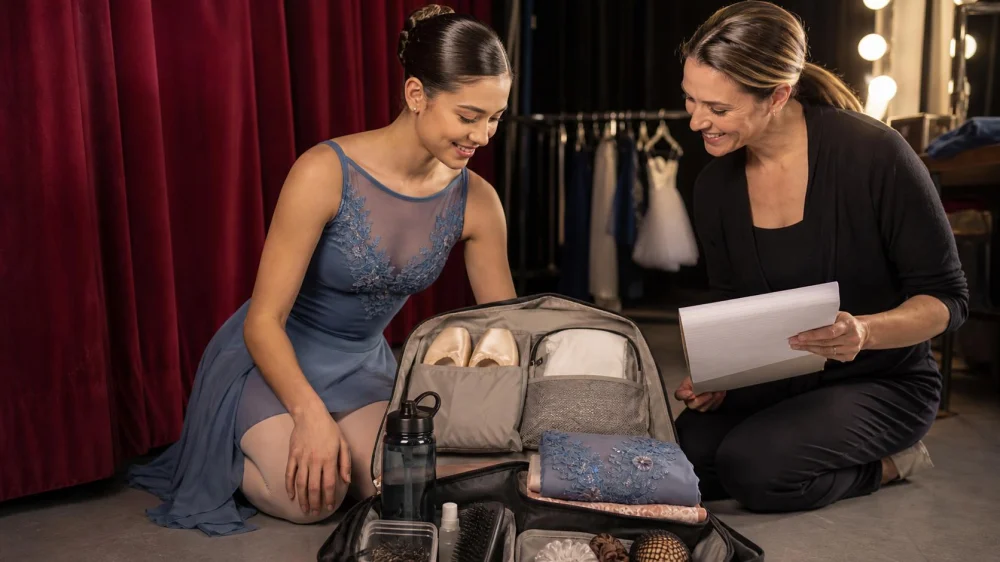
- Use a checklist by dance. Place each approved costume and accessory together in performance order.
- Label discreetly. Mark the dancer's name on removable items as the studio permits, without covering costume details.
- Protect footwear. Carry dance shoes in a separate clean bag and wear street shoes outside the performance area.
- Bring approved backups. Pack only requested pins, hair supplies, tights, sewing items, or adhesive. Adults should control sharp tools.
- Minimize valuables. Leave unnecessary jewelry, electronics, cash, and sentimental items at home.
Add a water bottle and non-messy snack only if allowed. Avoid foods that can stain costumes or create allergy concerns in shared dressing spaces. Keep prescribed medication with the authorized adult or according to the studio's documented process.
Use a calm backstage routine
Check in with the assigned adult, place belongings in the designated area, and learn the route to the stage, restroom, and emergency exit without wandering. Warm up only as directed and within available space. Backstage is not the place to add new tricks or repeat high-impact choreography.
- Listen for lineup and costume-change cues.
- Keep voices low near stage entrances.
- Do not touch another dancer's costume or props.
- Report a loose shoe, damaged costume, pain, illness, or missing item promptly.
- After performing, return to the assigned location rather than going into the audience.
A small mistake onstage does not require stopping unless safety is involved. Continue with the group when possible and follow teacher cues. Review performance notes later, not during a hurried change.
Safety and important notes
Do not block exits, prop doors, or share access codes. Follow venue emergency instructions and the studio's supervision policy. Children should know the authorized pickup person and reunion point but should not leave the supervised area alone.
Pain, dizziness, breathing difficulty, or an injury should be reported immediately. Costumes and shoes should permit the required movement without unsafe pinching, slipping, obscured vision, or loose pieces. Do not improvise a repair that creates a new hazard.
Sources and evidence notes
This checklist reflects common performing-arts production, costume-management, and safeguarding practice. Exact call procedures, backstage access, photography, food, medication, and pickup rules are local. Use the studio's current recital packet and venue instructions.
Frequently asked questions
How early should a dancer arrive?
Use the stated call time. Arriving at audience door time may be too late for check-in, warm-up, costume checks, and lineup.
Should a dancer wear the costume in the car?
Only if instructed. Some studios prefer arrival dressed; others protect costumes until backstage. Covering and seat-belt safety still matter.
Can parents stay backstage?
Often only authorized volunteers and staff may enter. Follow access and safeguarding rules rather than assuming.
What if a costume piece is missing?
Tell the assigned teacher or costume lead immediately. Do not borrow or alter another dancer's item without permission.
Next steps
Print the studio instructions, highlight call time and performer entrance, and build one checklist per routine. Pack and label the bag two days early, test approved costume and footwear, then confirm the supervision handoff and pickup plan with every involved adult.



 Westminster Arts Academy4.0 (149 reviews)
 The Viera Studio for the Performing Arts4.0 (36 reviews)
 RnnL Dance Studio5.0 (50 reviews)
 Studio Metropolis4.0 (5 reviews)
 Appalachian Irish Dance Company5.0 (1 reviews)
 Encore Performing Arts4.0 (14 reviews)
 How to Master K-Pop Dance for Kids
 Jazz Dance That Boosts Confidence – Complete Guide for Beginners
 Jazz Dance for Kids – Complete Guide
 Samba for Kids – Complete Guide
 Do 6th Graders Have School Dances? What Students & Parents Should Know
 Ballroom Dance to Burn Calories – Effective Tips and Dance Styles