
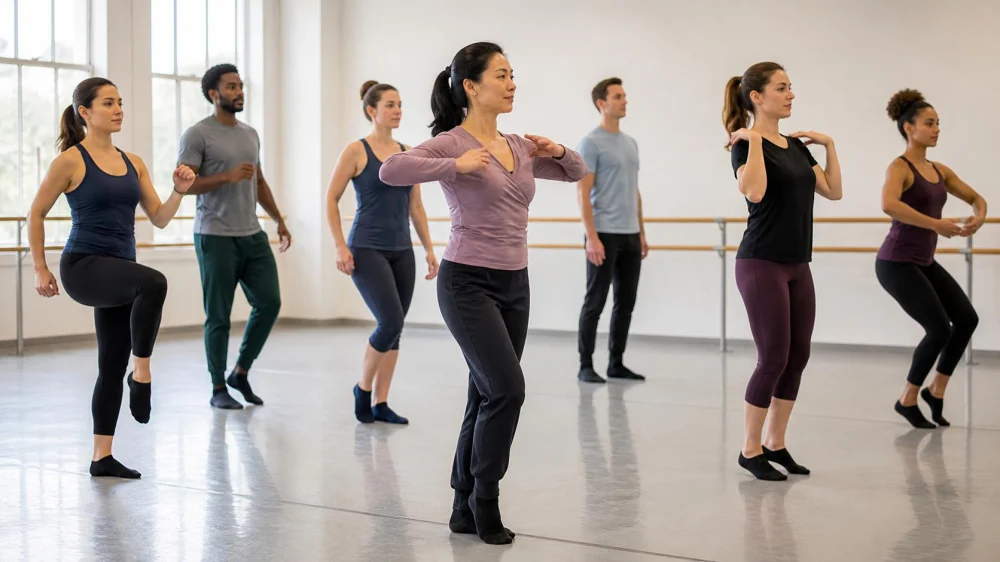
Dance Warm-Up: Build Readiness Before Deep Stretching
On this page
Quick answer
A dance warm-up should gradually raise body temperature, move major joints through comfortable ranges, activate the muscles needed for class, and rehearse low-intensity versions of upcoming movement. Begin with easy continuous activity, then mobility and control, then style-specific patterns. Save long, intense, or end-range stretching for the point your teacher or clinician recommends, not the first cold minutes in the studio.
This guide is for generally healthy dancers in U.S. recreational and training settings. It is not a treatment plan or a substitute for a teacher, physical therapist, athletic trainer, or physician. Injury, hypermobility, pregnancy, recent surgery, and medical conditions may require an individualized sequence.
What a dance warm-up should do
A useful warm-up prepares for the actual demands ahead. It is not a flexibility contest, a conditioning workout that creates fatigue, or a fixed ritual copied from another style. The goal is to arrive at the first demanding combination alert, coordinated, and able to control the movement range you will use.
Good warm-ups progress from general to specific and from low to higher intensity. They give the dancer time to notice stiffness, pain, balance changes, unusual fatigue, or an unsafe surface before jumps, floorwork, turns, lifts, or large ranges increase the consequences of a mistake.
Warm does not mean exhausted. Heavy breathing, shaky legs, or reduced coordination before technique begins may indicate too much intensity. Adjust the duration and pace to the room temperature, travel time, class level, and your current condition.
A practical warm-up sequence
- Arrive and scan. Check the floor, footwear, space, clothing, and any soreness or restriction. Tell the instructor about a relevant limitation.
- Start with easy continuous movement. Walk, march, step side to side, or use another low-impact pattern that gradually increases warmth without abrupt range.
- Move major joints comfortably. Explore ankles, knees, hips, spine, shoulders, elbows, and wrists within controlled pain-free ranges appropriate to the style.
- Activate support and alignment. Use simple calf raises, hip control, trunk stability, foot articulation, shoulder support, or balance work selected for the class.
- Add dynamic range. Use smooth leg swings, lunges, reaches, pliés, or traveling patterns without forcing momentum beyond control.
- Rehearse class vocabulary. Practice smaller, slower versions of turns, jumps, isolations, weight shifts, floor transitions, or partner patterns.
- Build intensity in stages. Increase speed, range, direction changes, and complexity only when coordination remains clear.
The order matters more than a universal number of repetitions. A short beginner class may integrate the warm-up into instruction; an advanced rehearsal may require a longer personal preparation before group work begins.
Make it specific to the class
For ballet, the sequence may emphasize foot articulation, turnout control within individual anatomy, calf readiness, trunk organization, and progressively larger leg ranges. For hip-hop or street styles, it may add grooves, isolations, rhythm changes, and grounded weight shifts. Contemporary class may require spinal articulation, floor transitions, and changes of level. Ballroom or social dance may focus on posture, weight transfer, foot pressure, and partner connection without force.
Jumps need progressive landing practice and lower-leg readiness. Turns need spotting, balance, and controlled preparation. Floorwork needs wrists, shoulders, hips, and spatial awareness. Lifts and partnering require a teacher-led progression, communication, and the actual partner rather than solo imitation of the final load.
A warm-up copied from a video may not match the studio floor, class style, injury history, or teaching plan. Use online material only when you understand its purpose and it aligns with qualified instruction.
Where stretching fits
Dynamic mobility moves into and out of a comfortable range with control and often fits the middle of a warm-up. Static stretching holds a position for a period of time and may be used later according to the training goal. Neither method should produce sharp pain, numbness, tingling, joint pressure, or loss of control.
Deep stretching at the start of class is not automatically useful. A dancer may temporarily reach farther without having the strength or coordination to control that range during movement. This is especially important for hypermobile dancers, who may need more stability and less emphasis on increasing range.
Flexibility training is a separate goal from immediate readiness. Discuss frequency, intensity, and timing with a knowledgeable teacher or clinician. Do not force a split, turnout, backbend, or partner-assisted stretch to match another dancer.
Readiness checklist
- Breathing and body temperature have increased gradually.
- Major joints can move through the class range without sharp pain.
- Balance and landing control feel predictable.
- Footwear and clothing are secure.
- The floor and surrounding space are clear.
- You have rehearsed key class movements at lower intensity.
- You know which movements need modification today.
- You are alert rather than fatigued.
Safety limits and important notes
Stop and tell the instructor if movement causes sharp or increasing pain, sudden weakness, instability, dizziness, chest pain, unusual shortness of breath, numbness, or another concerning symptom. Seek appropriate medical care for severe or persistent symptoms. Do not use a longer warm-up to hide an injury or make a restricted movement safe.
Children and adolescents should not be pushed into adult range goals. Pointe work, extreme flexibility, acrobatics, lifts, and return after injury require qualified supervision and readiness assessment. Room heat, heavy clothing, or topical warming products do not replace progressive movement preparation.
Frequently asked questions
How long should a dance warm-up take?
There is no universal duration. It depends on the style, intensity, environment, dancer, and whether the teacher integrates preparation into class. Continue until you have progressed through general and specific readiness without fatigue.
Is stretching the same as warming up?
No. Stretching addresses range of motion, while warming up prepares temperature, coordination, control, and movement patterns. Stretching can be one component at the appropriate time.
Can I warm up in the hallway?
Only if the studio permits it and the surface, traffic, ceiling, and space are safe. Avoid blocking exits, doors, or other dancers. Low-space preparation should not include uncontrolled kicks or jumps.
What if I arrive late?
Follow the studio policy and speak with the teacher. Do not jump directly into the most demanding combination or create a private warm-up that obstructs class. The teacher may ask you to observe or join at a safer point.
Should I use foam rolling before class?
It may be part of some dancers' routines, but it does not replace progressive movement. Use it only when appropriate for you, avoid painful pressure, and follow professional advice for an injury or medical condition.
Sources and evidence notes
This article reflects broad dance, sport, and performing-arts practice: warm-ups progress from general movement to task-specific rehearsal, readiness requires control as well as range, and pain is not a flexibility target. Exact exercises and timing should come from the class plan and individualized professional guidance.
Next steps
List the three most demanding actions in your next class and build a short progression toward them: easy movement, controlled mobility, support activation, and smaller rehearsals. Ask the instructor how personal warm-up fits the class. Keep notes on what improves readiness without fatigue, and revise the sequence when the style or physical demand changes.
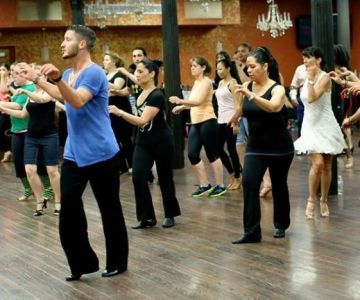
 Revolution Dance Academy5.0 (9 reviews)
 1989 Pole - a pole fitness and dance studio5.0 (17 reviews)
 Harmony Health Yoga, dance, Pilates classes, school, special events, and private sessions4.0 (36 reviews)
 K-Theatre Dance Complex5.0 (6 reviews)
 Veracity Dance Project5.0 (4 reviews)
 Duval Dance Studio5.0 (15 reviews)
 Do Boys Wear Tuxedos to High School Homecoming Dance? Style Tips & Advice
 The History of Contemporary Dance for Couples
 Ballet to Burn Calories – Complete Guide
 Why Swing Dance Is Popular for Adults
 Why Bachata Is Popular and You Can Learn at Home
 Samba for Seniors – Complete Guide: Benefits, Tips, and How to Get Started