
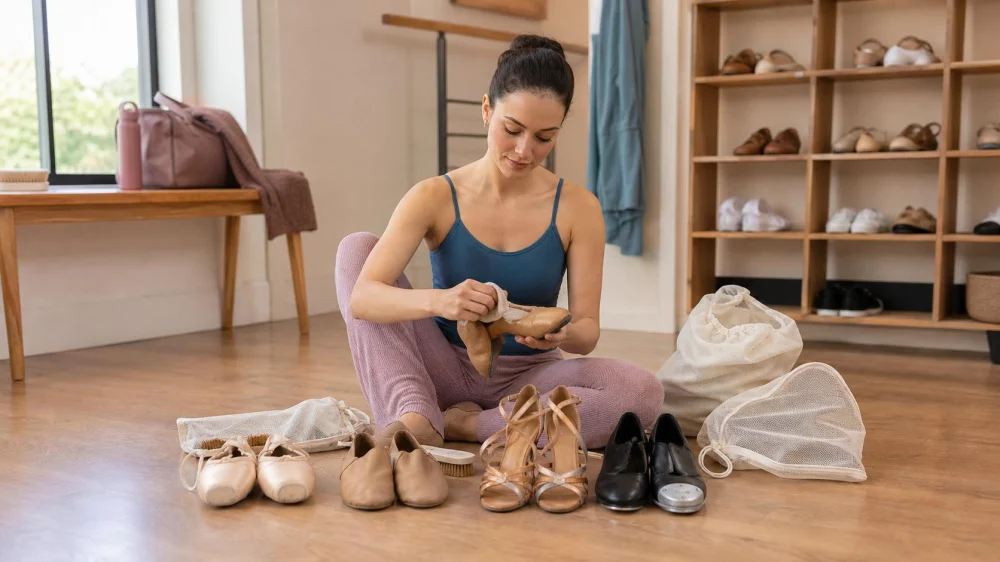
Dance Shoe Care: Clean, Dry, and Store by Material
On this page
Quick answer
Care for dance shoes by identifying the upper, sole, adhesive, and finish; following the maker's instructions; removing surface dirt with the least aggressive approved method; air-drying away from direct heat; and storing shoes in a breathable compartment. Inspect soles, straps, fasteners, seams, and structure before every class. Stop using shoes that no longer fit or support the intended movement.
This guide is for dancers using common studio shoes in the United States. Ballet slippers, pointe shoes, jazz shoes, tap shoes, character shoes, ballroom shoes, sneakers, and specialty footwear require different care. The manufacturer, fitter, teacher, and studio-floor policy should guide the exact method.
Identify the shoe before cleaning
Material-specific care means choosing a process compatible with every part of the shoe, not only the visible upper. Check product documentation for:
- canvas, leather, satin, mesh, knit, synthetic, or mixed-material uppers;
- suede, leather, rubber, split, full, resin, or specialty soles;
- glued, stitched, nailed, screwed, or molded construction;
- elastic, ribbon, buckles, laces, snaps, taps, heel caps, and decorative finishes;
- washability, approved products, drying method, and warranty restrictions.
Do not assume color, appearance, or a social-media tip identifies the material. Test an approved method on a hidden area when instructions permit, especially for dyed leather or satin.
Build a safe care routine
- Separate street and studio use. Put dance shoes on inside the approved area so grit, moisture, and outdoor contaminants do not reach the floor.
- Dry after use. Remove shoes from sealed plastic, loosen closures, and let them air in a ventilated place away from heaters, dryers, strong sun, and open flame.
- Remove dry debris gently. Use the maker-approved brush or cloth. Keep tools for suede soles separate from tools used on dirty street footwear.
- Spot-clean only as approved. Use minimal product and moisture. Avoid soaking, twisting, machine washing, or harsh chemicals unless the manufacturer explicitly permits them.
- Store without crushing. Use a breathable bag or compartment and protect rigid toes, heels, taps, and buckles from impact.
For odor, start with complete drying, clean socks or tights, and rotation between pairs where practical. Fragrances may mask odor without addressing moisture or contamination and can irritate shared spaces.
Know when to repair or replace
Before class, inspect fit and the parts that contact the floor. Look for separated soles, slick contamination, deep wear, loose taps or screws, bent shanks, crushed toe boxes, broken elastic, frayed ribbons, unstable heels, exposed hardware, and uneven tread.
- Ask a qualified repair professional: about replaceable heel caps, straps, soles, taps, or stitching when the shoe design allows.
- Ask the teacher or fitter: whether changing structure or fit remains appropriate for the dancer's technique and class.
- Replace: when safe traction, secure attachment, intended support, or correct fit cannot be restored.
Do not add household glue, tape, oil, powder, or grip products to a sole unless approved by the shoe maker and studio. A treatment that feels helpful on one floor can damage another or create unpredictable traction.
Important limitations
No cleaning method restores worn structure or makes one shoe suitable for every floor. Studio rules may prohibit rosin, water, brushes, dark sole marks, outdoor footwear, or certain taps. Ask before treating shoes at the edge of a dance floor.
Foot pain, numbness, blisters, skin breakdown, or repeated instability should not be solved only by cleaning or tightening the shoe. Stop, assess fit and technique with qualified instructors or fitters, and seek medical advice for injury or persistent symptoms.
Sources and evidence notes
This guide reflects common footwear-care, material-protection, and dance-floor safety principles. Exact products, brush direction, washing, tap adjustment, and replacement criteria are shoe-specific. Use current manufacturer instructions and professional fitting or repair guidance.
Frequently asked questions
Can canvas ballet slippers go in a washing machine?
Only if the specific manufacturer permits it. Construction, elastic, dye, and adhesives vary, and heat can change fit.
Should suede soles be brushed?
Some makers and studios recommend a dedicated suede brush, while others limit where and how it is used. Confirm both policies.
Can wet dance shoes go in a dryer?
Usually direct heat is risky for fit, adhesives, and materials. Follow the maker's drying instructions and air-dry when directed.
How often should dance shoes be replaced?
There is no universal schedule. Frequency, technique, fit changes, floor, shoe type, and structural wear matter more than calendar age.
Next steps
Photograph the shoe label and care instructions, identify every material, and create a small approved kit for that pair. After each class, air the shoes and inspect them; before the next purchase, bring the worn pair to a teacher, fitter, or repair professional for comparison.
 Westminster Arts Academy4.0 (149 reviews)
 The Viera Studio for the Performing Arts4.0 (36 reviews)
 RnnL Dance Studio5.0 (50 reviews)
 Studio Metropolis4.0 (5 reviews)
 Appalachian Irish Dance Company5.0 (1 reviews)
 Encore Performing Arts4.0 (14 reviews)
 How to Master K-Pop Dance for Kids
 Jazz Dance That Boosts Confidence – Complete Guide for Beginners
 Jazz Dance for Kids – Complete Guide
 Samba for Kids – Complete Guide
 Do 6th Graders Have School Dances? What Students & Parents Should Know
 Ballroom Dance to Burn Calories – Effective Tips and Dance Styles