
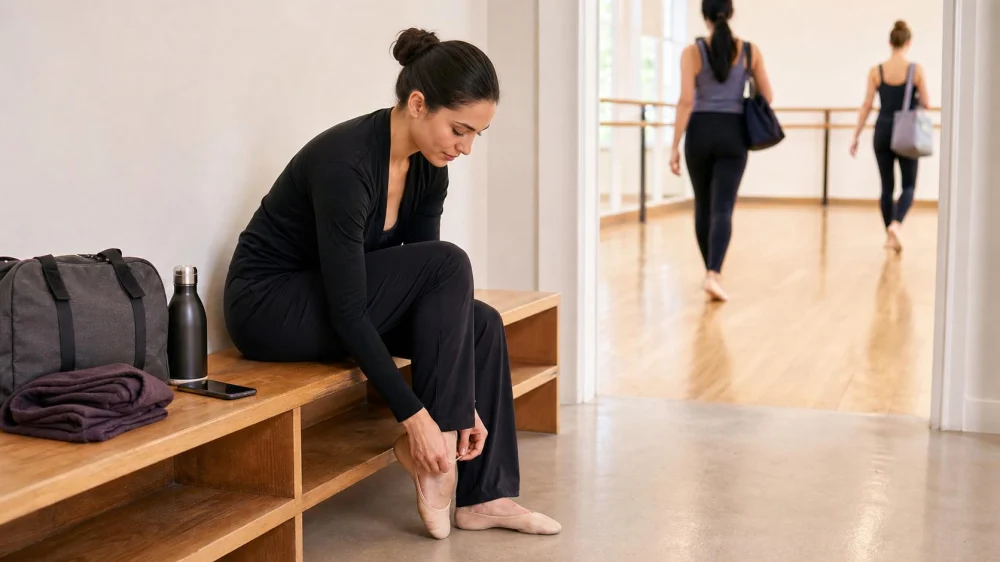
Dance Class Arrival Routine: Get Ready Without Rushing
On this page
- Quick answer
- Prepare before leaving home
- Choose a realistic arrival window
- Follow the studio entry routine
- Manage shoes and personal items
- Prepare your body and attention
- What to do when you are late
- Five-minute readiness checklist
- Limitations and important notes
- Frequently asked questions
- Evidence notes
- Next steps
Quick answer
A calm dance-class arrival starts before the commute: confirm the schedule, pack required shoes and clothing, plan a buffer, and know the studio's entry rules. On arrival, check in, change only in permitted areas, secure personal items, silence devices, and be ready for the teacher-led start. If you are late, wait for permission to enter rather than interrupting or skipping essential preparation.
This routine is for students attending regular dance classes in the United States. Studio rules, building access, supervision, changing areas, footwear, and arrival times vary. The teacher and studio policy should guide the final routine.
Prepare before leaving home
- Confirm the class. Check the date, start time, studio room, instructor, level, and any schedule message. Special rehearsals may use a different entrance or time.
- Review required clothing and shoes. Pack the items listed by the studio, plus any approved hair supplies or protective equipment. Label belongings discreetly.
- Pack a closed water bottle. Confirm where it may be placed. Avoid open cups in dance spaces.
- Plan the route and parking. Allow for building entry, public transit, parking, walking, elevators, stairs, or an adult handoff for minors.
- Handle food and medication needs. Follow personal health guidance and studio rules. Do not share medication or leave it unsecured.
- Use a small bag checklist. Shoes, required clothing, water, payment or class card if needed, and only the personal items you can secure.
Choose a realistic arrival window
“Arrive early” should mean enough time for the studio's actual process, not waiting outside long before supervised access begins. Ask how many minutes the studio recommends. A large building, crowded parking lot, locked lobby, or required check-in can add time even when travel is short.
For a new studio, allow extra time to find the correct entrance and ask where street shoes, bags, restrooms, and waiting family members belong. Do not enter staff-only rooms or another class to search for help. Use the published contact method when access instructions are unclear.
Follow the studio entry routine
- Enter through the designated door and check in as required.
- Keep hallways, exits, stairways, and accessibility routes clear.
- Wait in the assigned area until the prior class ends or the teacher invites entry.
- Use changing rooms or restrooms only as permitted; never change in public hallways.
- Ask before crossing a dance floor in outdoor shoes.
- Follow rules for observers, guardians, siblings, photography, and pickup.
When another class is finishing, keep voices low and avoid watching through doors or windows unless the studio allows it. Give departing dancers room to collect their belongings before moving in.
Manage shoes and personal items
Place outdoor shoes where they will not create a trip hazard or bring debris onto the dance floor. Inspect dance shoes before class: check ties, elastic, fasteners, soles, and obvious damage. Do not wear a shoe that no longer stays secure.
Store bags, coats, and bottles in the assigned area. Keep valuables with you only when the studio provides a safe method; otherwise bring fewer items. Silence phones and smartwatches, and follow rules about recording. A device used for music, medical monitoring, or accessibility may require advance agreement with the teacher.
Secure hair and remove jewelry only as required for the style and studio. Do not place pins, tape backing, wrappers, or loose accessories on the floor.
Prepare your body and attention
Use the few minutes before class to settle, not to attempt intense stretches, jumps, turns, or tricks without instruction. If the studio provides an approved individual preparation routine, follow it in a clear area. Otherwise wait for the teacher-led warm-up.
Notice pain, illness, dizziness, unusual fatigue, or an injury that could affect participation. Tell the instructor privately before class and ask about permitted modifications. The teacher may recommend observation, reduced movement, or sitting out; a dance class is not the place to test whether a serious symptom will disappear.
Mentally review one goal from the previous class, then direct attention to the room. Listen for announcements, note spacing, and be ready to begin when called.
What to do when you are late
Use the studio's published late-entry rule. Entering immediately can interrupt instruction, surprise moving dancers, or place you in a combination without preparation. Wait where staff can see you, contact the desk when appropriate, and accept that entry may be delayed or refused after a cutoff.
If invited in, place belongings quietly, tell the teacher about any relevant condition, and join only at the point directed. Do not attempt to “catch up” by rushing through a private warm-up in a walkway. After class, ask what material you missed and how to review it.
Five-minute readiness checklist
- Checked in and confirmed the correct room
- Outdoor shoes and bag stored without blocking a route
- Required dance shoes secure and clothing adjusted
- Water bottle closed and placed where permitted
- Phone and watch silenced according to studio rules
- Instructor informed privately about relevant limitations
- No loose jewelry, pins, wrappers, or equipment on the floor
- Attention in the room and ready for the class opening
Limitations and important notes
- Minors should follow the studio's adult handoff, sign-in, supervision, and pickup procedure exactly.
- Building emergency rules and staff directions take priority over a personal routine.
- Never prop open a secured entrance or admit an unknown person.
- Do not leave bags, shoes, or bottles in exit paths, at the edge of active movement, or on stairs.
- Arrival preparation cannot replace a progressive class warm-up or medical clearance when needed.
Frequently asked questions
How early should I arrive for dance class?
Follow the studio's recommendation. Many students need only a modest buffer, while a first visit or complex building may require more time. Do not arrive before supervised access is available.
Can I enter while the previous class is still running?
Only if the studio directs you to. Wait in the assigned area and avoid crossing the floor or interrupting instruction.
What if I forgot my dance shoes?
Tell the teacher before class. Do not substitute outdoor shoes or socks without permission, because flooring, style, and safety needs differ.
Should I stretch before the teacher arrives?
Use only an approved gentle routine in a safe area. Avoid deep stretching or demanding skills before the class warm-up, especially when your body is not ready.
Can I leave my phone in the studio?
Follow the studio's storage rule. Silence it, protect personal information, and do not record unless explicit permission covers the class and every person involved.
Evidence notes
This routine follows common studio-management and class-readiness principles: verify logistics, protect access routes, control personal items, respect the prior class, communicate limitations, and join teacher-led preparation. Exact timing and entry rules belong to the studio.
Next steps
Save the studio's schedule and entry instructions, make a five-item bag checklist, and calculate a realistic door-to-studio buffer. At the next class, use the readiness checklist and note which step caused delay. Adjust that one step before the following visit.
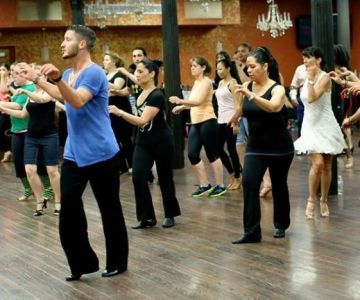

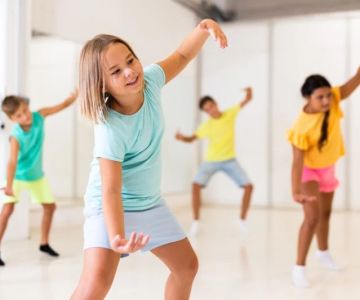
 Royal Pointe Dance Academy4.0 (25 reviews)
 Salsa Mia4.0 (132 reviews)
 Stage Door Dance, Inc.5.0 (1 reviews)
 San Gorgonio Ballet5.0 (6 reviews)
 Bee Music Art Culture Center5.0 (36 reviews)
 Boys & Girls Club of San Pedro4.0 (20 reviews)
 Top 10 Bachata Moves That Boost Confidence for Beginners
 Why Ballroom Dance Is Popular for Burning Calories: A Fun and Effective Workout
 Why Waltz Is Popular to Burn Calories
 Ballroom Dance to Burn Calories: Complete Fitness Guide
 How to Master Waltz Fitness Routine for Better Balance and Grace
 How to Master K-Pop Dance Near Me in the USA: A Complete Guide for Beginners