
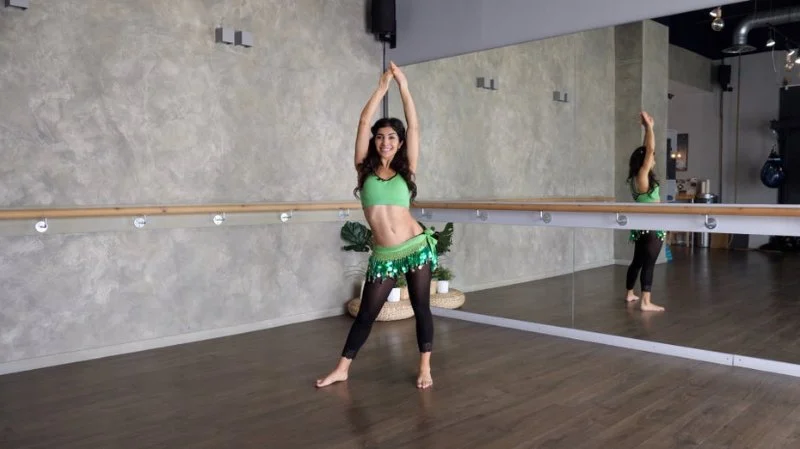
- - Understanding the Foundations of Belly Dance Movement - belly-dance-foundations
- - Building Core Strength and Body Awareness - core-strength-body-awareness
- - Mastering Hip Movements and Isolation Control - hip-movement-isolation
- - Learning Arm Flow and Upper Body Expression - arm-flow-expression
- - Real Beginner Story: First Dance Class Experience - beginner-dance-story
- - Step-by-Step Practice Routine for Beginners - beginner-practice-routine
- - Common Mistakes and How to Correct Them - beginner-mistakes-correction
- - Long-Term Growth in Belly Dance Training - long-term-dance-growth
Understanding the Foundations of Belly Dance Movement
Starting your journey in belly dance for beginners is less about memorizing steps and more about understanding how your body naturally moves. Belly dance is built on controlled isolation, rhythm awareness, and expressive flow rather than rigid choreography.
Many beginners are surprised to learn that belly dance technique training begins with simple posture alignment. Standing correctly with a relaxed spine and grounded feet creates the foundation for every movement that follows. Without this base, even basic steps can feel stiff or unbalanced.
Unlike many Western dance styles, belly dance emphasizes internal control rather than large traveling movements. This makes it accessible to people of all ages and fitness levels, especially those learning how to learn belly dance at home without prior experience.
Understanding this philosophy early helps beginners avoid frustration and builds confidence from the very first practice session.
Building Core Strength and Body Awareness
One of the most important elements in belly dance basic steps is core engagement. Your abdominal muscles, lower back, and hips all work together to create smooth, controlled movements.
Developing body awareness is essential because belly dance is not about moving the whole body at once—it is about isolating specific muscle groups. For example, your hips may move while your upper body remains still, or your chest may lift while your lower body stays grounded.
Beginners often struggle with this concept at first. A common issue is overthinking movements, which leads to stiffness. The key is repetition and slow practice until muscle memory develops naturally.
A simple way to build awareness is to practice in front of a mirror. This allows you to observe subtle differences in posture and alignment, helping you refine your technique over time.
Mastering Hip Movements and Isolation Control
Hip movement is the heart of belly dance. Without proper control of the hips, the dance loses its signature fluidity and expression.
1. Basic Hip Drops
Hip drops are one of the first movements beginners learn. The motion involves lifting one side of the hip and gently dropping it in a controlled rhythm. This teaches timing and muscle engagement.
2. Hip Circles
Hip circles require continuous movement in a circular motion. This helps develop fluid transitions and strengthens coordination between both sides of the body.
3. Figure Eight Movements
Figure eights are more advanced but essential for belly dance technique training. They involve drawing horizontal or vertical patterns with your hips, creating elegant flowing motion.
Many beginners find these movements challenging at first, but with consistent practice, they become second nature.
Learning Arm Flow and Upper Body Expression
While hips often get most of the attention, arm movements are equally important in belly dance for beginners. Arms add elegance, emotion, and storytelling to every performance.
Proper arm flow should feel soft and continuous, almost like floating through water. Stiff or rigid arms can break the visual harmony of the dance.
Beginners are encouraged to keep shoulders relaxed and elbows slightly bent. This allows natural movement without tension, which is essential for graceful transitions.
Combining arm flow with hip movement creates a full-body expression that defines belly dance as an art form rather than just exercise.
Real Beginner Story: First Dance Class Experience
A first-time student at a community dance studio in California shared an experience that many beginners can relate to.
Walking into their first beginner belly dance tutorial, they expected complex choreography immediately. Instead, the instructor focused entirely on posture, breathing, and slow hip isolations.
At first, the student felt awkward and uncoordinated. Moving hips independently from the upper body felt unnatural. However, after a few sessions, something clicked. The movements started to feel smoother, and confidence began to build.
By the end of the month, the student was able to perform a simple routine combining hip drops and arm waves. The transformation was not just physical but emotional—they felt more connected to their body and more confident in movement.
This story highlights an important truth: belly dance for beginners is not about instant perfection, but gradual discovery.
Step-by-Step Practice Routine for Beginners
Consistency is the key to mastering belly dance. A structured practice routine helps beginners build muscle memory and improve coordination over time.
1. Warm-Up and Stretching
Start each session with light stretching to loosen the hips, shoulders, and spine. This prepares the body for controlled movement and reduces risk of strain.
2. Slow Isolation Drills
Practice hip drops, circles, and chest isolations slowly. Focus on precision rather than speed.
3. Combination Practice
Once basic movements feel comfortable, begin combining them. For example, pair hip circles with arm flow to build coordination.
4. Free Movement Exploration
End each session with free movement. This allows creativity to develop naturally and helps reinforce confidence.
Over time, this routine becomes the foundation for more advanced choreography and performance skills.
Common Mistakes and How to Correct Them
Many beginners struggle with similar challenges when learning how to master belly dance for beginners. One of the most common mistakes is over-tensing the body, especially in the shoulders and lower back.
Another frequent issue is rushing movements. Belly dance requires control and precision, and fast execution often leads to loss of form.
Some learners also forget to engage their core, which results in unstable or unclear hip movements.
The solution to all these issues is slow, mindful practice. Recording yourself or practicing in front of a mirror can help identify areas that need improvement.
Professional instructors often emphasize that correction is part of the learning process, not a sign of failure.
Long-Term Growth in Belly Dance Training
As beginners progress, belly dance becomes more than just a physical activity—it evolves into a form of self-expression and confidence building.
Long-term improvement comes from consistent practice, exposure to different styles, and gradual increase in complexity. Many dancers eventually develop their own unique style based on personal interpretation of movement.
Attending workshops or joining structured programs can also accelerate growth. For those looking for professional guidance, American Dance Academy offers structured learning paths, technique-focused training, and performance development opportunities designed specifically for beginners and intermediate dancers.
Ultimately, mastering belly dance is not about perfection but about connection—connection to rhythm, movement, and personal expression.



 Richens/Timm Academy of Irish Dance5.0 (5 reviews)
 Dance Kraze Dance Studio4.0 (41 reviews)
 Diamond K Dance Studio5.0 (34 reviews)
 Imagery In Motion Dance5.0 (12 reviews)
 Ballet Vermont5.0 (2 reviews)
 Endicott Dance Academy4.0 (21 reviews)
 Why Shuffle Dance Is Popular for Seniors in the USA
 Do You Have a Dance in Middle School? How to Prepare and Have Fun
 Do Schools Still Have Dances? Exploring Modern Trends and Traditions
 The History of Line Dance: Step by Step Guide for Beginners and Enthusiasts
 Can Students Slow Dance at Dysart Schools? Here’s the Real Story
 Hip Hop Step by Step Guide: Everything You Should Know