Recording Dance Class: Consent, Privacy, and Review
On this page
Quick answer
Ask the teacher and studio before recording any dance class, then confirm whether other students may appear and whether the video is for private practice or public sharing. Position the camera only in an approved area, avoid blocking movement, and stop when requested. Store the file securely, delete unwanted footage, and review one learning goal at a time rather than judging your whole performance.
This guide is for dance students and teachers in the United States. Recording, privacy, publicity, music, choreography, employment, and minor-consent rules vary by location and studio. A studio policy or explicit direction can be stricter than general etiquette.
Ask before you record
A phone in a studio affects more than its owner. It may capture classmates, staff, mirrors, conversations, original choreography, music, and information visible around the room. Silence does not equal consent.
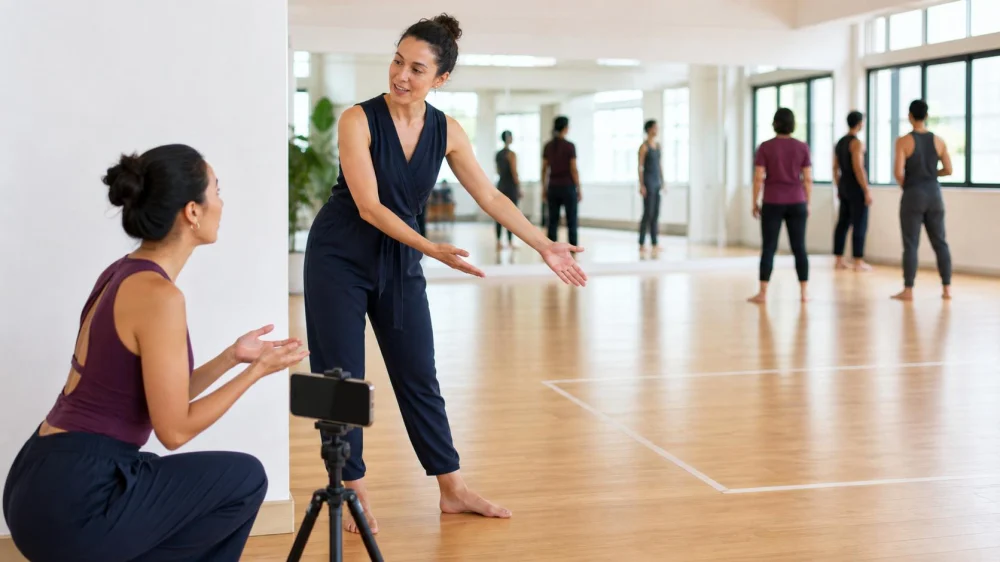
Ask before class or during a planned break, not after recording has begun. A useful request is specific: “May I record myself during the final run for private practice, from the back corner, without including anyone who opts out?”
The teacher may say no because of studio policy, licensing, guest choreography, student comfort, class focus, safety, or minors. Accept the answer without requiring a personal explanation. Written notes or a teacher-approved demonstration may be the alternative.
Define what permission covers
Permission to record is not automatically permission to post. Confirm four boundaries:
- Who: only you, a small group, the teacher, or the whole class
- When: one combination, a final run, or a designated recording period
- Where: an approved corner or fixed camera zone
- Use: private review, sharing within the class, a portfolio, or public social media
Ask identifiable classmates directly when they may appear. A person can agree to be in a practice recording while declining public posting or tagging. Consent can also be withdrawn; have a practical plan to crop, blur, limit access, or delete the file.
Frame the video respectfully
Place the device where the teacher approves and where it cannot become a trip hazard. Keep bags, tripods, cables, and power banks outside travel paths, exits, and barres. Do not move studio equipment without permission.
Use a narrow frame that captures the dancer who requested recording. Mirrors can include people outside the obvious camera direction, so check reflections. Avoid changing rooms, hallways, front desks, attendance lists, payment screens, and private conversations.
Do not walk across the floor to adjust a camera while others are dancing. Test framing before the combination begins, mute notifications, and use airplane or focus mode if it will not interfere with necessary communication.
Store and share carefully
Review the clip before saving it to a shared album or automatic cloud folder. Delete accidental footage and trim time before or after the dance that captured conversation. Use device access controls and avoid public links for private practice files.
Before posting, confirm consent for every identifiable person, music, studio name, and choreography. Do not imply that the teacher or studio endorses the post. Follow requests about credits, tags, location, captions, and takedown.
If a platform automatically suggests faces, locations, or public discovery, check those settings. A classmate's decision not to use social media should not be overridden by someone else's recording.
Review with a purpose
Video is most useful when it answers a specific practice question. Choose one goal: timing, direction, spacing, arm pathway, weight transfer, or the transition between two steps.
- Watch once without stopping to recall the full sequence.
- Watch the chosen section at normal speed.
- Compare it with the teacher's correction or approved reference.
- Name one observable change to try.
- Practice briefly without staring at the screen.
- Recheck later if recording is still permitted.
A single camera angle can distort depth, alignment, timing, and spacing. Use video as one feedback source, not proof that a movement is safe or technically correct.
A practical studio checklist
- I have teacher and studio permission.
- Everyone identifiable has agreed to the intended use.
- The phone and tripod are outside movement paths.
- The frame avoids mirrors or bystanders who opted out.
- Notifications and flash are off.
- I know whether the file may be shared or only reviewed privately.
- I will delete accidental or unwanted footage.
Limitations and special cases
- Classes involving minors require the studio's formal permission process and parent or guardian requirements.
- Auditions, rehearsals, competitions, workshops, and guest-teacher classes may prohibit recording entirely.
- Original choreography and recorded music can involve rights beyond personal privacy.
- A teacher should not diagnose pain or injury from a casual clip; stop painful movement and seek appropriate care.
- Local law may govern audio recording even when a phone is openly visible.
Frequently asked questions
Can I record if only I am in the frame?
Ask first. The file may still include voices, mirrors, music, studio property, or choreography, and the device can affect class safety and focus.
Does the teacher's yes cover social media?
Not unless public sharing was part of the permission. Confirm the use separately and obtain consent from every identifiable person.
What if someone walks into my video?
Do not post it as-is. Trim, crop, blur, restrict, or delete the clip based on the person's preference and studio policy.
Is slow-motion review helpful?
It can reveal a pathway or transition, but it can also exaggerate small differences and hide musical timing. Review at normal speed first and use the teacher's correction as context.
Where should a tripod go?
Only in a teacher-approved area outside dance paths, exits, barres, and walkways. A wide view is not worth creating a trip hazard or capturing people who did not consent.
Next steps
Before your next class, read the studio recording policy and prepare one clear request that states the time, frame, people, and intended use. If permission is granted, record one learning goal, store the clip privately, and delete anything outside that agreement.
Sources and evidence note: This article applies general consent, privacy, studio-safety, and deliberate-practice principles. The studio's current policy and qualified local advice control legal, contractual, minor, music, and choreography questions.
 All Soles Dance Studio5.0 (1 reviews)
 Village Dance Arts4.0 (9 reviews)
 On The Edge Dance Company2.0 (5 reviews)
 S&S dance4.0 (28 reviews)
 Rhythm Roots Dance5.0 (35 reviews)
 Ancient City Gymnastics4.0 (44 reviews)
 The History of Pole Dance Near Me in the USA | Cultural Evolution & Modern Studios
 Top 10 Bachata Moves for Couples to Improve Partner Dance Skills
 Discover Foxtrot in 2025: Why You Should Learn and Enjoy This Timeless Dance
 Why A Step Above School of Dance LLC OK Is a Top Choice for Young Dancers
 Are School Dances Cheesy? Why They Might Be—and Why That’s Okay
 Bachata Explained: Common Mistakes to Avoid for Better Dancing