Partner Dance Consent: Clear Boundaries Without Awkwardness
On this page
Quick answer
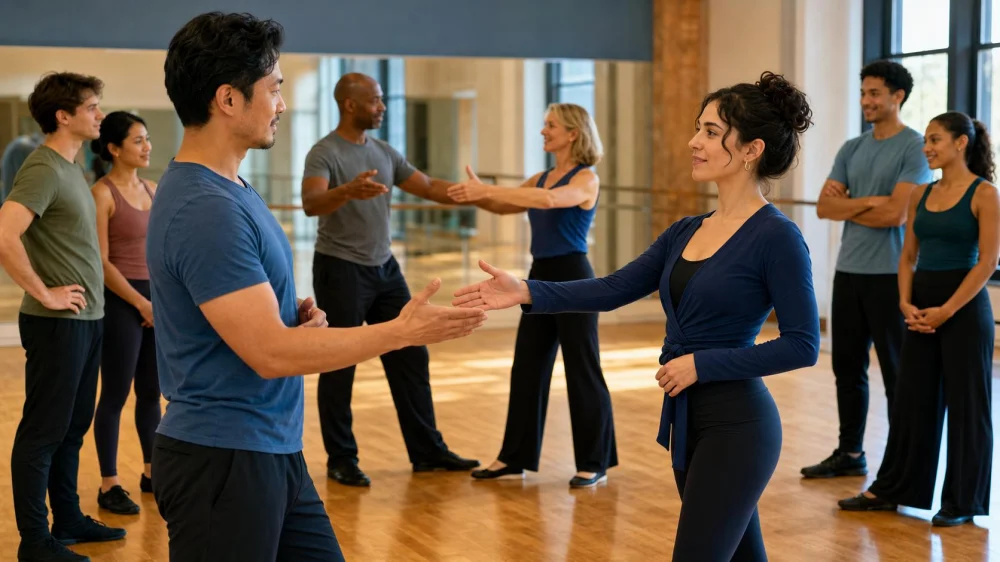
Partner dance includes physical connection, but joining a class or accepting one dance is not blanket permission for every hold, correction, dip, lift, or close embrace. Ask in plain language, accept “no” without debate, and check again when the contact changes. Studios should make opting out routine, private when possible, and free from punishment or embarrassment.
What consent means in partner dance
A healthy dance connection is cooperative. It depends on both people understanding what is proposed and choosing it freely. The useful classroom standard is simple: permission should be specific, active, and reversible. Silence, freezing, nervous laughter, or completing a drill under pressure should not be treated as a confident yes.
Consent is also contextual. Agreeing to a standard open hold does not automatically approve a close embrace, a hand on a different part of the body, a lift, a dip, or off-floor contact. A previous dance is not permanent permission. Either person can pause or end a dance at any point.
Lead and follow are movement roles, not authority levels. Neither role gives someone the right to override the other dancer’s comfort, and gender assumptions should not replace a direct question.
Ask before contact changes
Short questions work better than a long speech. They make the choice clear without making the moment dramatic. Useful phrases include:
- “Would you like to dance?”
- “Is this hand position comfortable?”
- “Would you prefer open or closed hold?”
- “May I demonstrate that adjustment with my hand?”
- “Are you comfortable trying a supported dip?”
Ask again when the risk or intimacy changes. Lifts, drops, deep dips, weight-sharing shapes, close embrace, floorwork, and contact near the chest, hips, or head need more preparation than an ordinary basic step. Explain the move, name the contact points, describe how to exit, and give the dancer a genuine alternative.
Pay attention after the answer. A clear yes can be followed by hesitation or withdrawal. If a partner becomes rigid, pulls away, stops responding, or says “wait,” release the hold and check in. Do not make them justify the pause.
Make rotation and refusal easy
Partner rotation can improve learning, but mandatory rotation can turn a useful exercise into social pressure. At the start of class, instructors can explain three equally acceptable choices: rotate, stay with one partner, or practice solo. A dancer may switch choices during the lesson.
Teach a neutral decline that does not require a reason: “No thank you,” “I’m sitting this one out,” or “I’m staying with my partner.” The correct response is equally short: “Okay.” Repeated asking, teasing, sulking, demanding an explanation, or using class status to pressure someone undermines a voluntary choice.
For social dances, a person may decline one invitation and later accept another. That is not unfair treatment; it is an individual decision about a particular dance at a particular moment.
Use consent-aware teaching
Teachers hold extra influence because students may fear losing attention, advancement, or belonging. That makes a visible opt-in process especially important. Before touching a student to correct alignment, ask. State where and why contact would occur, then offer a verbal cue or self-demonstration as an alternative.
- Describe the correction first.
- Ask whether a hands-on cue is welcome.
- Name the exact contact point before touching.
- Use only the contact needed for the explanation.
- Stop immediately if the student withdraws permission.
For demonstrations, request a volunteer rather than automatically selecting someone. A volunteer can still change their mind. With minors, studios also need age-appropriate safeguarding rules, parent or guardian communication, observable interactions, and compliance with applicable law and governing-body policy.
Build a studio-wide system
Good boundaries should not depend on one especially thoughtful teacher. Put the expectations into registration materials, staff training, the first-class briefing, and the code of conduct. A practical studio checklist is:
- Explain that invitations, partner changes, and hands-on corrections are optional.
- Provide solo versions of partner exercises without lowering a student’s grade or access.
- Use consistent language for asking, declining, pausing, and changing contact.
- Identify at least two people who can receive a concern, including one outside the immediate teaching relationship.
- Offer a private reporting channel and explain what happens after a report.
- Prohibit retaliation, gossip, and punishment for setting a boundary or reporting a concern.
- Document repeated or serious incidents and follow the studio’s safeguarding and legal duties.
Post the policy where dancers can find it before class. A policy that appears only after a problem is harder to trust and use.
When a boundary is crossed
If you misread a signal or touch someone after they ask you to stop, release contact, step back, and acknowledge it. A useful response is: “I’m sorry. I’ll stop. What would you like now?” Avoid explaining why the contact was normal, insisting there was no bad intent, or asking the person to comfort you.
The affected dancer can leave the floor, change partners, speak to the instructor, bring a support person, or report through the studio’s process. For an ongoing pattern, a power imbalance, retaliation, threats, or serious misconduct, preserve relevant messages and write down dates, locations, witnesses, and what occurred. The studio should follow its established safeguarding and reporting duties rather than requiring the person affected to investigate the incident.
Important notes and limitations
This guide offers general classroom and social-dance practices, not legal advice or a substitute for a formal safeguarding policy. Laws, mandatory-reporting duties, governing-body rules, and procedures for minors vary by location and organization. If there is immediate danger, move to a safer place and contact local emergency services. Studios should obtain qualified legal or safeguarding guidance for their specific program.
Evidence and source notes
The classroom recommendations above adapt broader consent and sport-safeguarding principles to nonsexual dance contact. The U.S. Center for SafeSport describes consent as knowing, free, active, specific, and withdrawable, and its current materials address power imbalances and inappropriate physical contact. RAINN’s consent guidance emphasizes clear communication, mutual respect, ongoing agreement, and freedom from pressure. These sources do not create a universal dance-studio rule, so studios should combine them with local requirements.
- U.S. Center for SafeSport: Code Glossary
- U.S. Center for SafeSport: 2026 SafeSport Code
- U.S. Center for SafeSport: Minor Athlete Abuse Prevention Policies
- RAINN: Consent 101
Frequently asked questions
Do I need to ask before every basic step?
You do not need a new sentence for every count once both dancers have agreed to the activity and hold. Check again when contact, closeness, difficulty, risk, or the planned movement changes, and stop whenever either dancer withdraws.
Can an instructor require partner rotation?
A studio can design a rotating exercise, but a safer practice is to provide a meaningful opt-out or solo version. Declining contact should not cost a student access, respect, or advancement.
What if my partner says no to me but dances with someone else?
Accept the answer without argument. Consent applies to a specific person, activity, and moment; another choice later does not invalidate the earlier refusal.
Is a nonverbal signal enough?
Clear actions can communicate agreement, but ambiguity should trigger a verbal check. Silence or lack of resistance is not a reliable invitation.
What should a studio do after a report?
Prioritize immediate safety, explain the process and confidentiality limits, document the concern, avoid retaliation, and follow applicable safeguarding and legal duties. The person receiving the report should not promise an outcome before the facts are reviewed.
Next steps
Before the next class, choose one phrase for inviting, one for checking a hold, and one for declining. Studio leaders can add a two-minute boundary briefing, a no-penalty solo option, and a visible reporting route. Clear choices make partner work more focused, safer, and easier to enjoy.



 Just Dance Inc5.0 (2 reviews)
 Clermont Salsa5.0 (8 reviews)
 The Dunbar Pavilion4.0 (79 reviews)
 Dancer's Studio5.0 (7 reviews)
 Philadelphia Dance Theatre5.0 (24 reviews)
 Flamenco 4 Kids!5.0 (7 reviews)
 Bollywood Dance Styles to Try in 2025 – A Complete Guide
 Did the Girls on Dance Moms Go to School? The Truth Behind the Scenes
 Do High School Dances Still Exist? Exploring the Evolution of School Dances
 Why Is Square Dancing Taught in Schools
 Foxtrot for College Students: Expert Tips to Get Started
 Top 10 Ballet Moves for Beginners: A Complete Guide