Dance Studio Trial Class: What to Observe Before Enrolling
On this page
Quick answer
Use a dance studio trial class to evaluate fit, not to prove your ability. Confirm the style, level, teacher, class size, floor, footwear, accessibility, and full cost before booking. During class, notice whether instructions are clear, corrections are respectful, progressions are safe, and students have enough space. Afterward, compare your learning goal, comfort, schedule, policies, and budget before enrolling.
This guide is for U.S. adult students and parents comparing local dance programs. A single class is a sample; teachers, rooms, class groups, and schedules can change.
Questions before booking
- Is the trial the same class and teacher you would attend regularly?
- What experience, age range, clothing, and footwear are expected?
- Can an injury, disability, sensory need, or religious clothing requirement be accommodated?
- May a parent observe, and what privacy rules apply?
- Does the trial fee apply toward enrollment?
Describe your experience honestly. A true beginner class is more useful than a higher level chosen for its schedule or title.
Observe the teaching
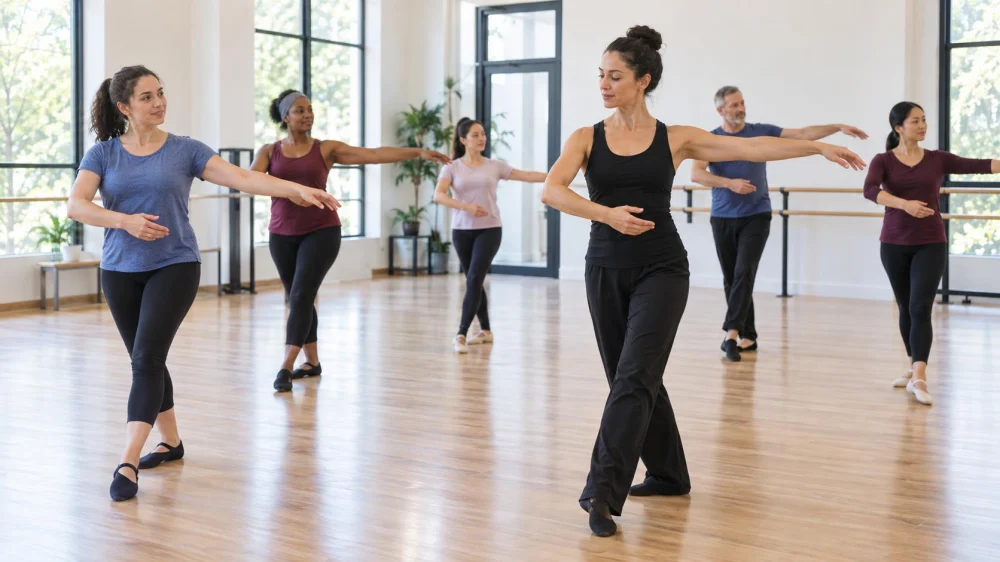
Look for a clear class arc: preparation, skill development, practice, and a controlled finish. The teacher should explain the goal, offer usable cues, and create room for questions without humiliating students.
Corrections may be verbal, visual, or physical. A responsible studio explains its touch policy and respects consent. For children, observe how the teacher manages attention, participation, frustration, and bathroom or pickup procedures.
The most charismatic teacher is not automatically the best fit. Choose the environment where you can understand feedback and practice consistently.
Check level and pace
Notice whether prerequisites match what the class actually requires. A suitable class challenges you while leaving enough time to understand alignment, rhythm, pathways, and transitions.
Ask how students move between levels and who makes that decision. Avoid programs that promise rapid advancement without explaining attendance, skill, strength, or readiness criteria.
Review space and safety
Check that the floor suits the dance style, the room has usable ventilation, and dancers can travel without repeated collisions. Exits and walking paths should remain clear. Ask how the studio handles injuries and emergencies.
Mirrors, barres, portable equipment, and speakers should be stable and used intentionally. Pain, dizziness, breathing trouble, or a new injury is a reason to stop and seek appropriate help, not to “push through” a trial.
Compare policies and costs
- List tuition, registration, costume, recital, competition, examination, and required clothing costs.
- Read cancellation, make-up, pause, refund, and automatic-renewal terms.
- Check the calendar for closures and performance commitments.
- Confirm photo, video, social-media, and child pickup policies.
- Compare travel time, parking, transit, waiting space, and accessibility.
A low class price may not be the lowest total cost. A prestigious program may not be ideal when its schedule or performance expectations conflict with your goal.
Important limits
A trial cannot verify every instructor credential, safety practice, or long-term class dynamic. Ask the studio directly, review written policies, and observe more than one option when the decision is significant.
Dance instruction is not medical treatment. Discuss injury restrictions with a qualified healthcare professional, and tell the teacher only the functional information needed for safe participation.
Frequently asked questions
Should I enroll immediately after a good trial?
You can, but first review the full schedule, costs, policies, and class consistency. Avoid pressure to sign before you understand the commitment.
What if the class felt too easy?
Ask what skills the teacher was assessing and whether another level fits. One slow class does not necessarily represent the full term.
Can I watch before participating?
Policies vary, especially for children's privacy. Ask in advance rather than arriving as an unannounced observer.
How many studios should I compare?
There is no required number. Compare enough options to understand teaching style, logistics, safety, and cost for your goal.
Sources and evidence notes
This article uses broad learning and safety principles: clear goals, appropriate progression, respectful feedback, usable space, and transparent policies support informed participation. Studio-specific facts must come from the studio; health limits come from qualified clinicians.
Conclusion and next steps
Write your goal, ask the studio's practical questions, and attend the actual class when possible. After the trial, note teaching clarity, level, comfort, safety, schedule, and total commitment. Enroll where those factors align—not simply where the first class felt most impressive.


 Broadway Bound Dance Company4.0 (23 reviews)
 Bridgewater Dance and Music5.0 (20 reviews)
 HIS Dance Academy5.0 (17 reviews)
 KidzDance4.0 (87 reviews)
 San Diego Hula Academy5.0 (5 reviews)
 BDC After School & Summer Camp5.0 (85 reviews)
 Dance Class Corrections: Listen, Apply, and Ask Clearly
 Do Schools Have Dances in Japan? A Deep Look into Student Culture and Social Life
 Bollywood Dance to Try in 2025 – Complete Guide to the Latest Trends
 Are School Dances Worth It? Honest Answers and Real Benefits for Students
 Dance Class Music Too Loud? Protect Your Hearing
 Why K-Pop Dance Is Popular and How You Can Learn It