Private vs. Group Dance Lessons: Which Fits Your Goal?
On this page
- Quick answer
- How the lesson formats differ
- When private lessons fit
- When group lessons fit
- Match the format to the goal
- Compare cost, time, and practice needs
- Evaluate the teacher and studio
- Use a four-week decision plan
- Limitations and safety notes
- Frequently asked questions
- Sources and evidence notes
- Conclusion and next steps
Quick answer
Choose private dance lessons when you need focused feedback on a specific goal, adapted pacing, choreography coaching, or preparation for a deadline. Choose group lessons when you want regular repetition, spatial awareness, community, partner rotation, and a lower per-class cost. Many dancers progress best with a consistent group class plus occasional private sessions for targeted problems.
This guide is for dancers and caregivers comparing instruction formats in the United States. The right choice depends on dance style, age, health, experience, learning needs, teacher qualifications, and studio policies.
How the lesson formats differ
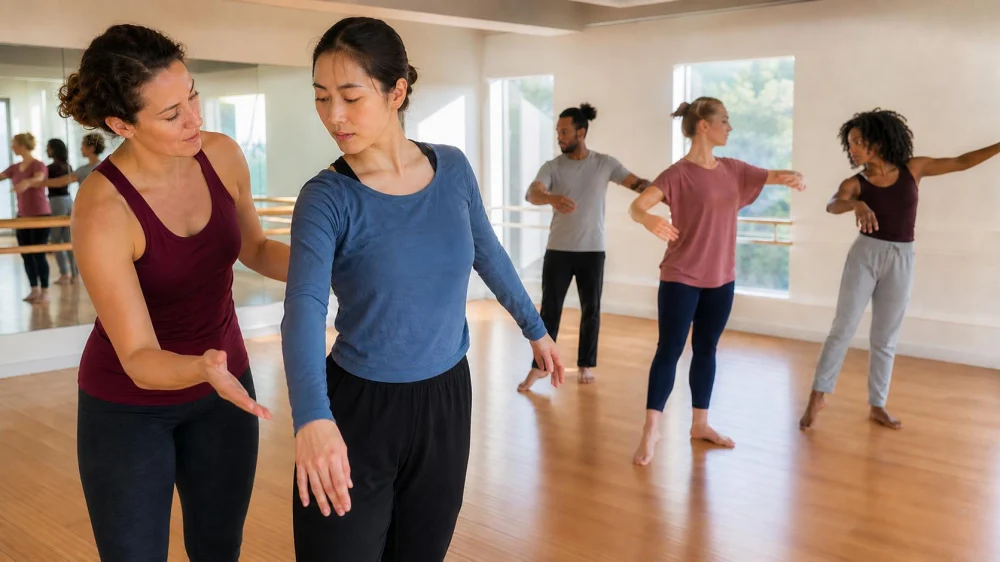
A private dance lesson is scheduled for one student or a small prearranged pair with an instructor. Content and pacing can be customized, but the student has fewer peers to observe and share space with.
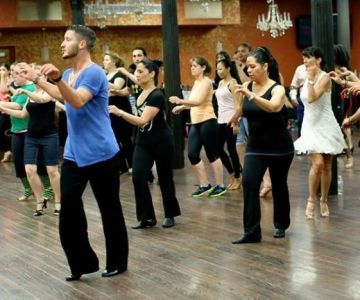
A group dance lesson follows a class plan for several students. The instructor divides attention, while dancers learn by watching corrections, moving in formations, adapting to others, and practicing material at a shared pace.
Neither format is automatically more advanced or effective. Quality depends on clear goals, sound teaching, appropriate progression, consistent attendance, and practice between lessons.
When private lessons fit
Private instruction is best for a defined problem or outcome. Examples include learning wedding choreography, preparing an audition variation, refining a turn sequence, adapting movement after professional clearance, or understanding a correction that remains unclear in class.
Advantages can include:
- more observation and feedback time;
- pacing adjusted to the student;
- privacy for questions or confidence-building;
- focused work on one role, routine, or technical issue;
- scheduling options outside a fixed class level.
Private lessons are not ideal when the goal depends on group spacing, partner rotation, ensemble timing, or regular social practice. They can also become inefficient if the student arrives without a goal or does not practice the agreed material.
When group lessons fit
Group classes provide a recurring structure and expose students to different bodies, timing, questions, and corrections. In social dance, changing partners can develop lead-and-follow adaptability when consent and studio policy support rotation. In performance styles, formations and shared musical timing are essential skills.
Advantages can include:
- consistent curriculum and progression;
- learning from corrections given to classmates;
- practice navigating space and traffic;
- motivation from a regular peer community;
- more class time per dollar in many studios.
Group lessons may be a poor fit when the listed level is substantially mismatched, the class is too large for safe feedback, access needs are not supported, or a fixed pace repeatedly prevents useful participation.
Match the format to the goal
- Learn a dance style from the beginning: start with a well-leveled fundamentals group for vocabulary and repetition; add private help if a specific barrier persists.
- Prepare choreography for a date: private or small-group lessons usually make the project scope and pacing easier to control.
- Improve social dancing: group practice offers varied partners and floor navigation; private lessons can target technique or communication.
- Prepare for an audition: use group class to maintain broad training and private coaching for selected material and presentation.
- Return after injury or illness: obtain appropriate professional clearance; choose a teacher and format able to respect restrictions without providing medical treatment.
- Build confidence: a supportive beginner group may normalize learning, while a short private series can reduce uncertainty before joining.
Compare cost, time, and practice needs
Compare the full commitment: tuition, registration, room rental, partner or accompanist fees, required shoes, cancellation rules, travel, and expected independent practice. Ask how long the lesson lasts and whether setup or warm-up is included in paid time.
A private lesson can deliver concentrated feedback, but too many corrections at once may be hard to retain. A group class can provide more weekly movement time but less individual attention. The useful measure is not corrections per minute; it is whether the dancer understands priorities and can practice them accurately.
Request a written rate and policy before booking. Packages may expire, and missed private lessons may have different consequences from missed group classes.
Evaluate the teacher and studio
- The teacher explains the plan and asks about relevant goals and restrictions.
- Corrections are specific, respectful, and appropriate to the dancer’s level.
- Touch is explained and consent is requested.
- Warm-up, progression, space, flooring, and class size support the activity.
- The teacher stays within professional scope and does not diagnose injuries.
- Policies cover cancellations, privacy, recording, guardians, emergencies, and complaints.
- The studio can explain which format is recommended and what success would look like.
A skilled performer is not automatically a skilled teacher. Look for communication, planning, observation, and the ability to adapt without promising unrealistic results.
Use a four-week decision plan
- Name one measurable goal. Examples: complete a beginner sequence on time, remember a short combination, or prepare one choreography section.
- Choose the main format. Select the class or private schedule most likely to provide the needed practice environment.
- Set a realistic practice plan. Use short, accurate sessions based on teacher guidance rather than unsupervised overtraining.
- Track useful evidence. Note what feels clearer, which correction repeats, attendance, confidence, and any discomfort.
- Review with the teacher. After several sessions, ask whether the format, level, and goal remain appropriate.
Do not judge only by soreness, sweat, or the number of new steps. Progress may appear as better timing, control, recall, comfort, and safer decision-making.
Limitations and safety notes
Dance instruction is not medical care. Persistent or significant pain, swelling, weakness, numbness, dizziness, breathing difficulty, or an acute injury needs appropriate professional assessment. Stop movements that feel unsafe and tell the instructor.
Private settings require clear safeguarding. For minors, confirm guardian access, observation rules, background-check or staff policies where applicable, doors and visibility, communication channels, and recording consent.
Frequently asked questions
Are private lessons faster than group classes?
They can focus feedback, but progress still depends on goal scope, practice, physical readiness, and teaching quality. “Faster” is not guaranteed.
Should a beginner start with private lessons?
Either can work. A well-taught beginner group builds community and spatial skills; a private lesson can orient someone with a specific concern before joining.
Can two people share a private lesson?
Many studios offer semi-private lessons. Confirm pricing, partner level, goals, cancellation responsibility, and whether the teacher can serve both dancers effectively.
How often should private lessons be scheduled?
Schedule them often enough to practice and apply feedback between sessions. Ask the teacher for a plan tied to the goal and budget rather than a universal frequency.
Sources and evidence notes
This comparison reflects broad teaching principles: individualized feedback supports specific goals, while group learning develops observation, shared timing, spatial awareness, and community. No format guarantees progress. Appropriate instruction, repetition, recovery, and student-teacher fit remain central.
Conclusion and next steps
Write down one goal, identify whether it requires individual correction or group practice, and compare the full schedule and policies. Use a consistent group class for broad development and add private coaching when a specific problem, choreography, or deadline justifies focused time. Reassess after several sessions using evidence from practice—not prestige or price alone.
 Bobbie Ann's Dance Studio4.0 (21 reviews)
 Exhibit 3 Dance Company5.0 (18 reviews)
 Cucala Dance Company - Astoria - Salsa Classes0.0 (0 reviews)
 Graceful Moves Dance Inc4.0 (15 reviews)
 East Tennessee Ballet Academy4.0 (12 reviews)
 Clearwater Dance Depot5.0 (38 reviews)
 Why Is Square Dancing Taught in Schools
 Ballroom Dance to Burn Calories – Effective Tips and Dance Styles
 Top 10 Pole Dance Moves to Improve Flexibility: Beginner to Advanced Guide
 Do Schools Still Have Dances? Understanding the Tradition of School Socials
 Hip Hop for Beginners: Common Mistakes to Avoid
 Top 10 Ballet Moves Trending on TikTok and How to Master Them