
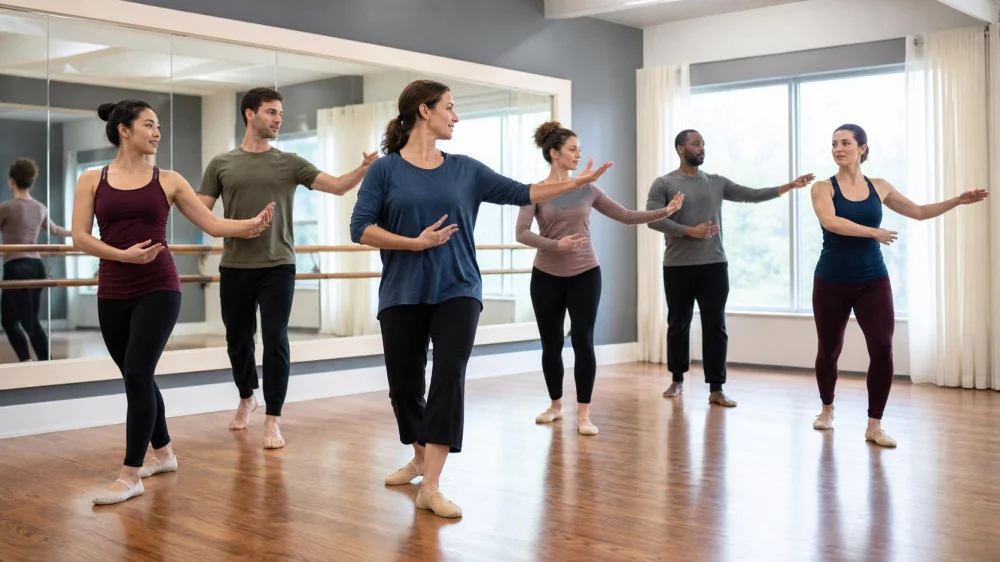
Dance Trial Class: How to Judge Teaching and Studio Fit
On this page
Quick answer
Use a dance trial class to judge whether the teaching process fits you—not whether you perform perfectly on day one. Look for a purposeful warm-up, clear demonstrations, manageable progressions, specific feedback, respectful corrections, appropriate spacing, and safe alternatives. After class, compare the experience with your goals, schedule, budget, and willingness to return consistently.
This guide is for adults evaluating recreational dance classes in the United States. Youth programs, pre-professional training, adaptive classes, auditions, and specialized techniques may require different criteria.
Prepare before the trial
Contact the studio before arriving so the trial measures the class rather than avoidable confusion.
- Confirm the exact style, level, teacher, room, date, and class length.
- Ask what prior experience the level assumes.
- Check clothing, footwear, changing-space, and arrival-time expectations.
- Ask whether observation, participation, recording, or a trial fee has special rules.
- Share relevant access needs or movement limitations privately and ask what modifications are possible.
- Read the cancellation, enrollment, and automatic-payment terms before providing billing information.
Set two or three goals for the visit. Examples include learning whether the pace suits a true beginner, whether the teacher explains alignment clearly, or whether the schedule can support weekly attendance.
Observe the teaching, not just the choreography
A strong performance by the teacher does not automatically create an effective class. Watch how the instructor helps students understand and progress.
Useful signs include:
- The class begins with preparation appropriate to the style and planned intensity.
- The teacher demonstrates from more than one useful angle or explains what students cannot easily see.
- Material is broken into manageable parts and repeated with a clear purpose.
- Counts, rhythm, direction, terminology, and quality are explained consistently.
- Corrections are specific, respectful, and connected to an actionable change.
- The teacher watches the room rather than dancing continuously without checking students.
- Progressions or alternatives are offered when students have different experience or mobility.
- Questions are handled without ridicule or unnecessary delay.
Best for learning: a pace that challenges you while leaving enough time to process and repeat. Not ideal: a class where confusion is treated as failure, corrections are humiliating, or risky material appears without preparation.
Evaluate the room and class culture
Studio fit includes the physical and social environment.
- Spacing: Students have room to travel without repeated near-collisions.
- Floor: The surface is clean, dry, maintained, and appropriate to the style and footwear.
- Visibility: Students can see demonstrations, mirrors do not replace teacher observation, and sightlines are reasonable.
- Sound: Music and instruction are understandable without unnecessary volume.
- Consent: Hands-on corrections, partner rotation, and recording follow clear policies and individual boundaries.
- Belonging: New students receive practical orientation without being singled out or ignored.
- Professionalism: Class begins and ends predictably, policies are consistent, and staff answer logistical questions clearly.
Notice how regular students treat one another. Friendly does not require forced socializing, but the room should allow people to learn without mockery, exclusion, or pressure to cross personal boundaries.
Review the fit after class
Wait until your breathing settles, then write brief notes before the experience blurs.
- Learning: Can you name one concept the teacher helped you understand?
- Challenge: Was the difficulty productive, too low, or so high that you could not engage?
- Feedback: Did corrections tell you what to change and how to try again?
- Body response: Did you feel normal effort, or sharp pain, dizziness, numbness, or another concerning symptom?
- Culture: Were boundaries, mistakes, questions, and differences handled respectfully?
- Logistics: Can you realistically sustain the commute, schedule, price, equipment, and attendance expectations?
- Motivation: Do you want to return for the learning process, not only because the class looked impressive?
One class can be unusual because of a substitute, rehearsal, low attendance, or new choreography. Ask whether what you experienced reflects a typical week before making a long commitment.
Trial-class decision scorecard
Rate each item as strong, uncertain, or poor:
- Correct level for current experience.
- Clear instruction and demonstrations.
- Useful repetition and progression.
- Respectful, actionable feedback.
- Safe floor, spacing, volume, and class management.
- Available modifications and appropriate challenge.
- Consent and privacy practices.
- Welcoming but professional class culture.
- Sustainable schedule, commute, and total cost.
- Clear enrollment and cancellation policies.
Choose the studio when the learning environment is strong and the practical commitment is sustainable. Consider a second trial when one important area is uncertain. Avoid committing when safety, respect, billing, or boundary concerns remain unresolved.
Limitations and important notes
A trial class is a sample, not a complete evaluation of a teacher, curriculum, or studio. Ask how progress is structured over several weeks, how substitute teachers are handled, and what happens when a student needs a different level.
Normal exertion differs from injury. Stop and inform the teacher if you experience sharp pain, sudden weakness, dizziness, chest pain, breathing difficulty beyond expected exertion, numbness, or loss of balance. Seek appropriate medical care for urgent, severe, persistent, or worsening symptoms.
Do not sign a long-term agreement based only on verbal promises. Review written price, renewal, cancellation, credit, costume, recital, equipment, and other fee terms before enrolling.
Frequently asked questions
Should I choose a class that feels easy?
Choose a level where you can engage with the material and still be challenged. Productive difficulty allows repetition and learning; constant confusion can signal that another level is a better starting point.
What if the teacher does not correct me?
In a single class, the teacher may prioritize group corrections or observe before giving individual feedback. Ask how corrections normally work and whether questions are welcome after class.
Is soreness after a trial class normal?
Some muscle fatigue can follow unfamiliar activity, but the article cannot assess symptoms. Sharp, severe, persistent, or worsening pain and other concerning signs deserve appropriate professional evaluation.
Should I try more than one studio?
Yes when practical. Comparing two or three classes can clarify which teaching style, pace, culture, schedule, and cost best fit your goals.
What if I like the teacher but not the logistics?
A class you cannot attend consistently may not be a good fit. Ask about another time, location, teacher, package, or attendance option before committing.
Sources and evidence notes
This scorecard reflects common education and dance-class practices: clear learning goals, progressive instruction, actionable feedback, appropriate challenge, respectful consent, safe space management, and sustainable attendance. Studio policies and individual needs supply the local detail.
Conclusion and next steps
Book a trial only after confirming style, level, teacher, clothing, cost, and policies. During class, watch how the teacher builds learning and manages the room. Afterward, score teaching, challenge, safety, culture, logistics, and motivation. Commit only when the experience and the practical terms support consistent return.
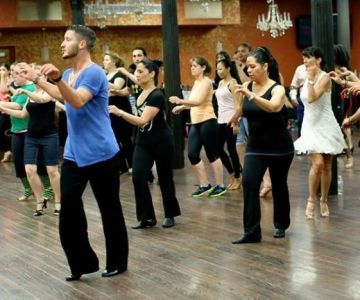


 Tracie's School of Dance4.0 (21 reviews)
 Dream Dance4.0 (38 reviews)
![Indigo Bollywood Dance Academy [Outreach- Brier Creek]](https://img.theamericandanceacademy.com/d7/2507/99051573252270_150x150.webp) Indigo Bollywood Dance Academy [Outreach- Brier Creek]5.0 (1 reviews)
Indigo Bollywood Dance Academy [Outreach- Brier Creek]5.0 (1 reviews) Creative Dance Arts4.0 (29 reviews)
 Anderson Young Ballet Theatre4.0 (10 reviews)
 Charlotte Cirque & Dance Center5.0 (23 reviews)
 Top 10 Swing Dance Moves Fitness Routine – Improve Your Fitness with Dance
 Can We Film in the Kaufman School of Dance at USC?
 Ballet to Improve Flexibility: Expert Tips for Enhancing Your Stretching Routine
 Ballet for College Students – Everything You Should Know
 Swing Dance Near Me in the USA: Step by Step Guide to Getting Started
 Can You Compete at Oireachtas Without Being Affiliated with a Dance School?