- 1- Understanding Ballet Foundations
- 2- Essential Ballet Positions
- 3- Basic Ballet Steps and Techniques
- 4- Intermediate and Advanced Moves
- 5- Common Mistakes to Avoid
- 6- Real-World Training Examples
- 7- Choosing the Right Resources and Equipment
1. Understanding Ballet Foundations
Ballet is built upon discipline, posture, and precision. Foundational knowledge is essential before attempting complex choreography. Core elements include proper alignment, turnout from the hips, and balance. Beginners should focus on understanding body mechanics to prevent injuries and enhance fluidity in movement.
Expert tip: Daily stretching and core strengthening improve turnout and stability, which are vital for executing advanced steps. At American Dance Academy, instructors emphasize starting with barre exercises to develop strength and muscle memory in new dancers.
2- Essential Ballet Positions
Ballet is structured around key positions that serve as the basis for all movements. These include:
2.1 Foot Positions
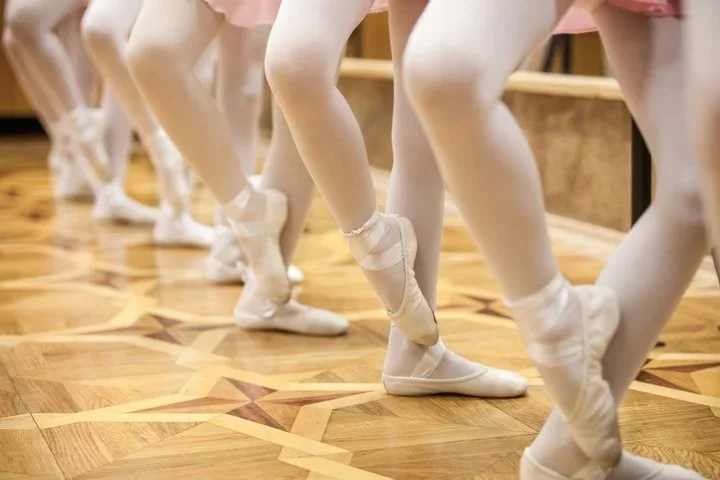
There are five primary foot positions, each requiring precise placement and turnout. Correct positioning ensures balance and proper technique for jumps and turns.
2.2 Arm Positions
Arm positions complement footwork and maintain symmetry. Beginners must practice coordination to achieve fluidity and grace.
2.3 Body Alignment
Proper posture and core engagement are crucial. Alignment affects the dancer’s balance, aesthetic line, and overall performance quality.
3- Basic Ballet Steps and Techniques
Once foundational positions are mastered, dancers can learn core steps:
3.1 Plie
The bending of knees while maintaining posture. Essential for jumps and transitions.
3.2 Tendu
Stretching the leg while keeping the foot on the floor, developing leg strength and flexibility.
3.3 Degage
Lifting the leg off the floor to a pointed position, enhancing speed and control in movement.
3.4 Rond de Jambe
Drawing a circle with the leg on the ground or in the air, improving hip rotation and coordination.
3.5 Assemble and Jete
Jumping techniques that combine coordination, timing, and strength. These steps form the basis of most choreography sequences.
4- Intermediate and Advanced Moves
After mastering basics, dancers can progress to:
4.1 Pirouettes
Spinning on one foot with balance and precision. Requires strong core and controlled spotting techniques.
4.2 Fouette Turns
Rapid consecutive turns demanding speed, balance, and strength.
4.3 Grand Jeté
Large, split-leap jumps across the stage that showcase flexibility and explosive power.
Real-world insight: Many dancers report significant improvement in grace and strength after integrating barre conditioning and floor exercises alongside advanced moves.
5- Common Mistakes to Avoid
- Incorrect turnout leading to hip strain.
- Collapsed posture affecting balance and alignment.
- Overextending arms or legs causing tension and reduced fluidity.
- Skipping barre exercises, which undermines foundational strength.
At American Dance Academy, instructors emphasize awareness and correction techniques to prevent long-term injuries and reinforce proper muscle memory.
6- Real-World Training Examples
6.1 Student Story
A beginner dancer in Los Angeles improved her pirouettes and balance after three months of structured barre and floor exercises, demonstrating the effectiveness of progressive training.
6.2 Workshop Highlights
Workshops focusing on posture and alignment have helped intermediate dancers refine jumps and turns, showing how targeted exercises translate to better stage performance.
7- Choosing the Right Resources and Equipment
For aspiring ballet dancers, appropriate equipment and guidance are crucial:
- Proper ballet shoes to support posture and prevent injury.
- High-quality mirrors for self-assessment during practice.
- Access to experienced instructors and structured programs.
- Resources like instructional videos, guides, and training plans from American Dance Academy for comprehensive skill development.
By combining structured guidance with the right equipment, dancers can progress efficiently while maintaining safety and technique integrity.


 Chinese Dance Academy5.0 (5 reviews)
 Middleburg Academy of Dance4.0 (21 reviews)
 RAVE Studios by Dance Progressions5.0 (2 reviews)
 West Coast Dance Theatre Alameda4.0 (10 reviews)
 St John's School of the Arts4.0 (7 reviews)
 Maria Verdeja School of the Arts4.0 (14 reviews)
 Top 10 Bachata Moves Fitness Routine
 Samba for Couples: Common Mistakes to Avoid
 K-Pop Dance Workout Benefits: Common Mistakes to Avoid
 Zumba Tutorial – Everything You Should Know
 A Wonderful Life High School Dance Scene: Why It Still Dazzles
 Train Like a Pro: The Benefits of a Professional Hip Hop Dance Videos School